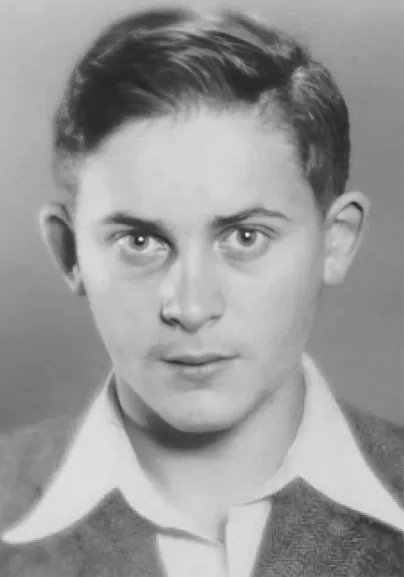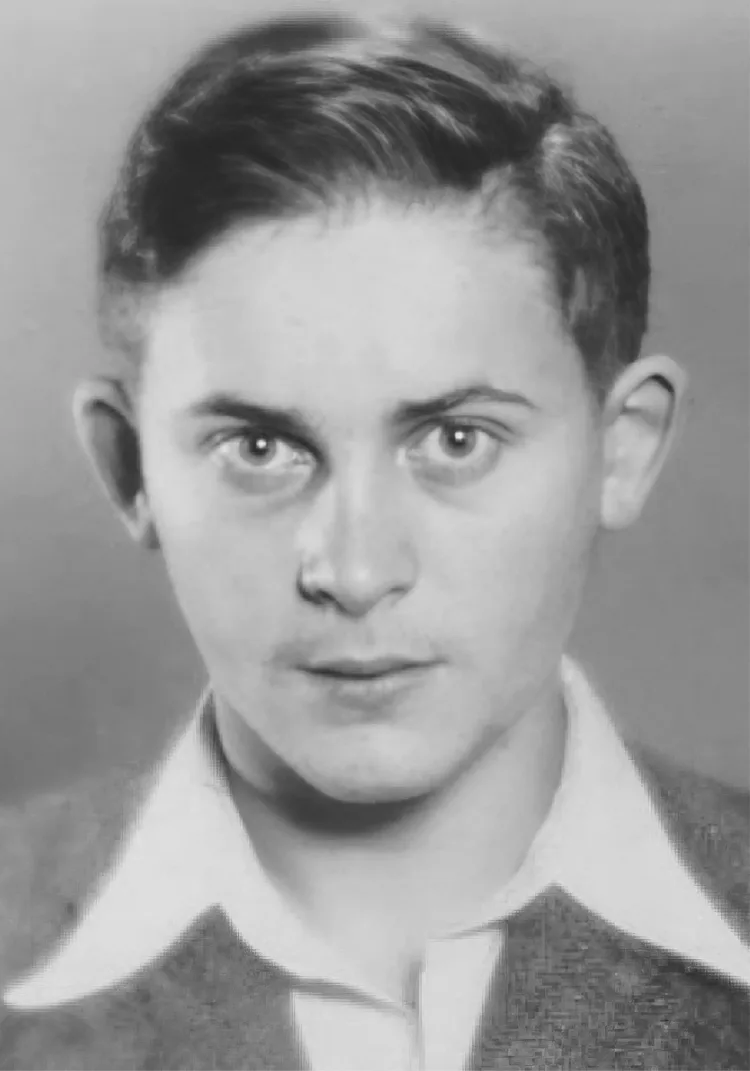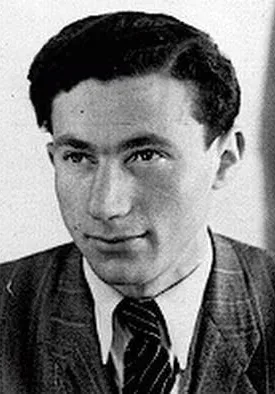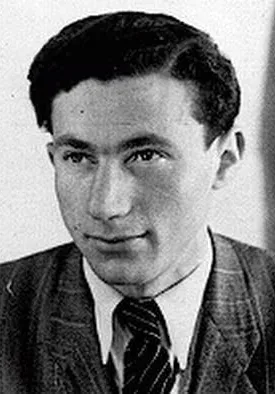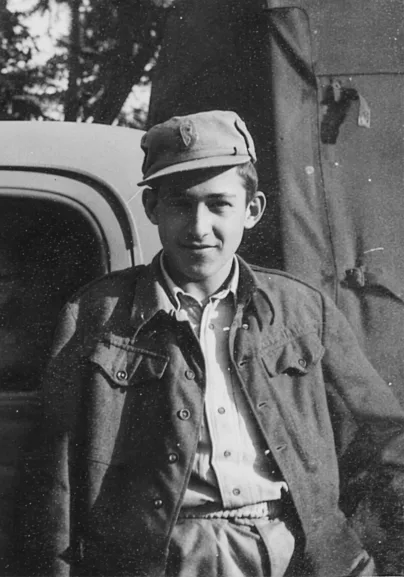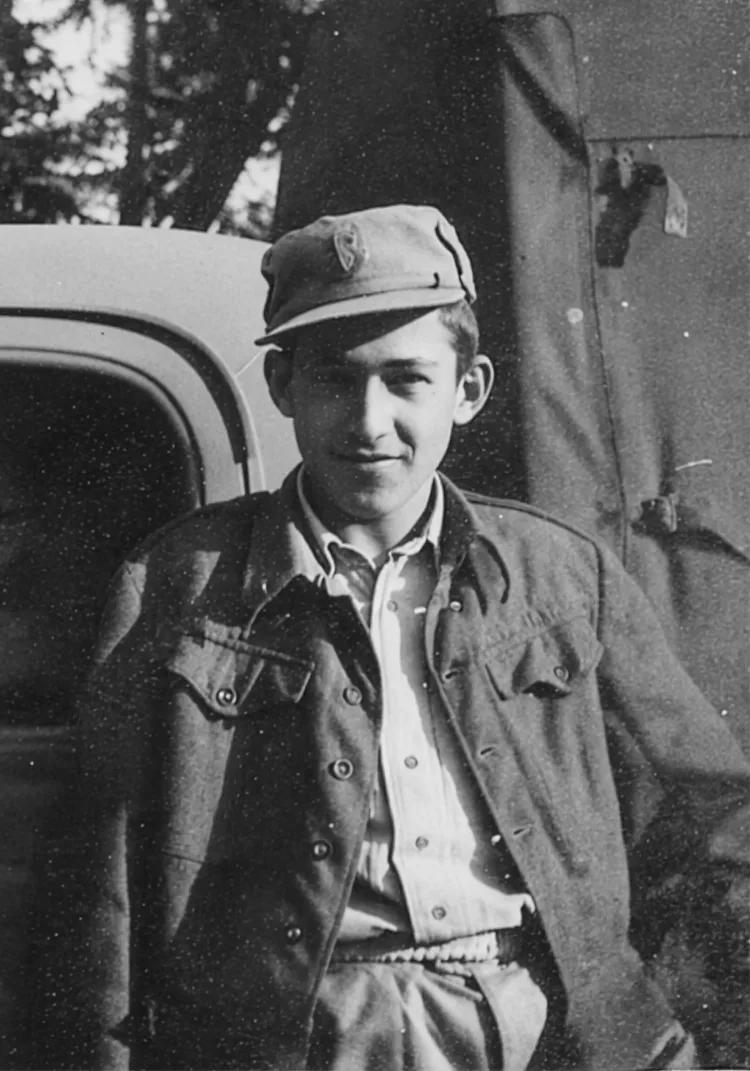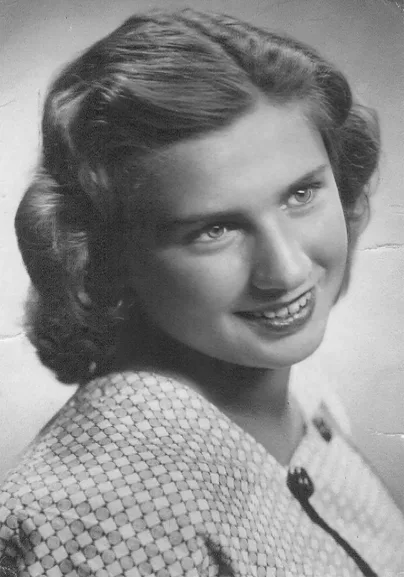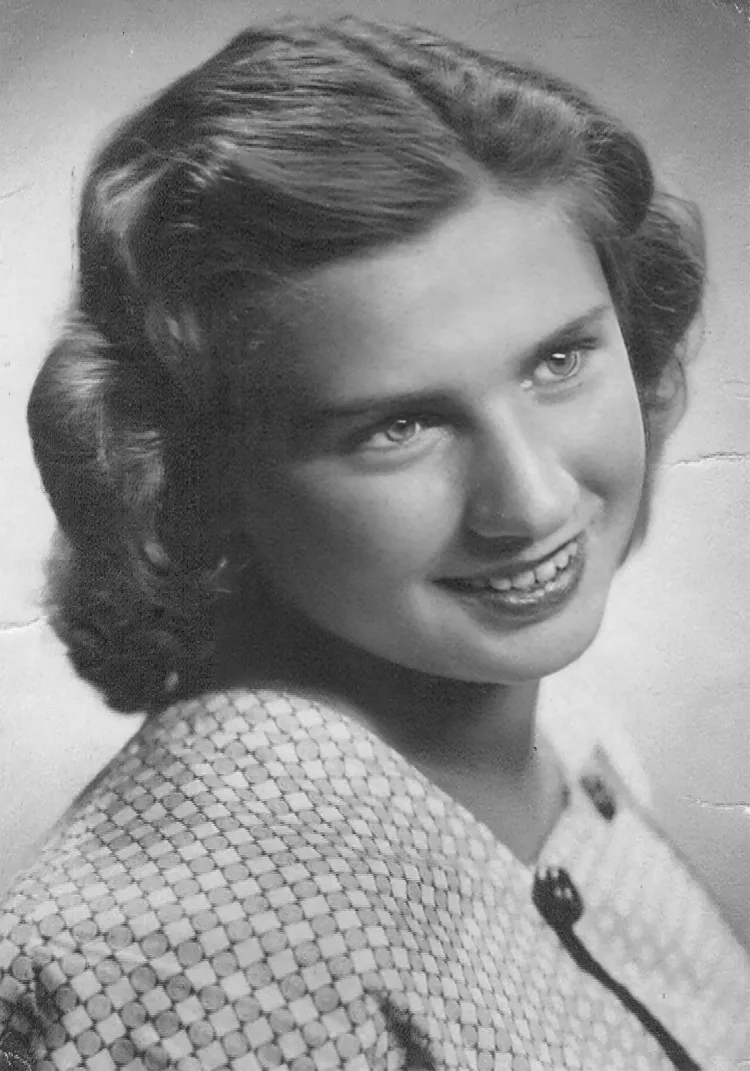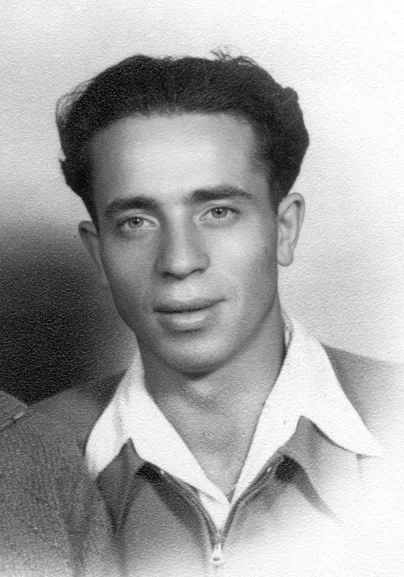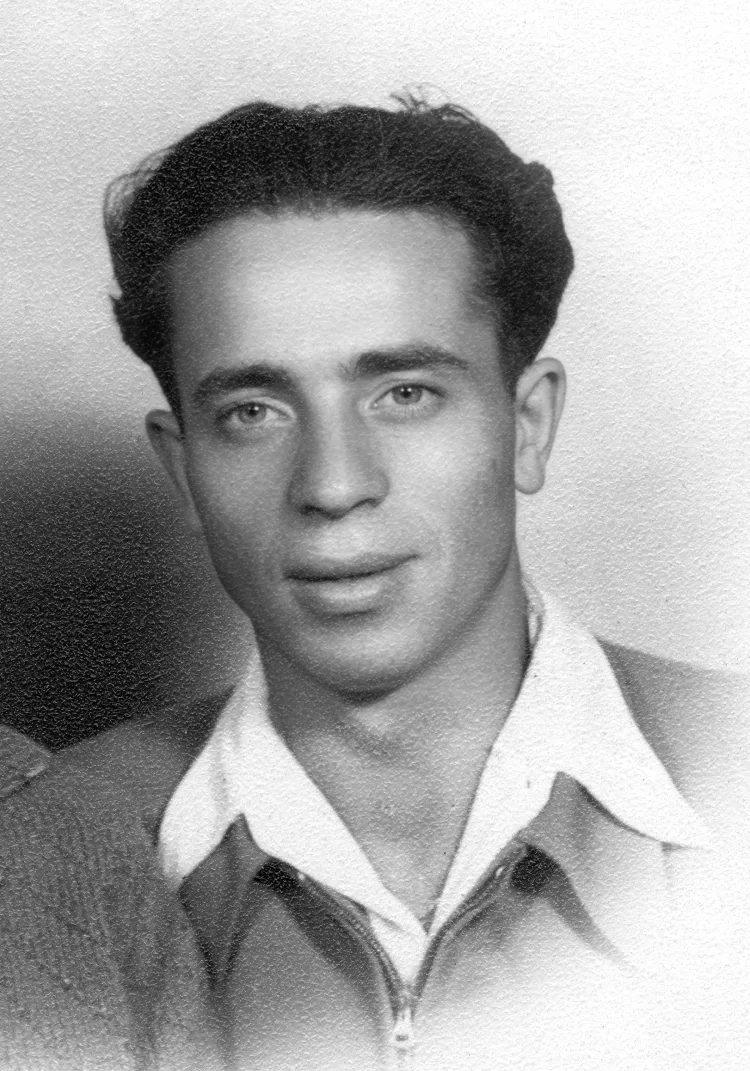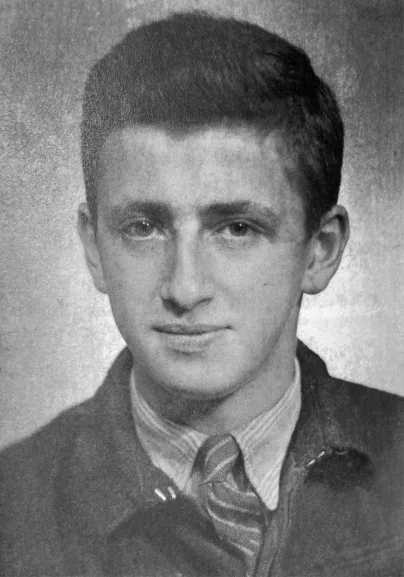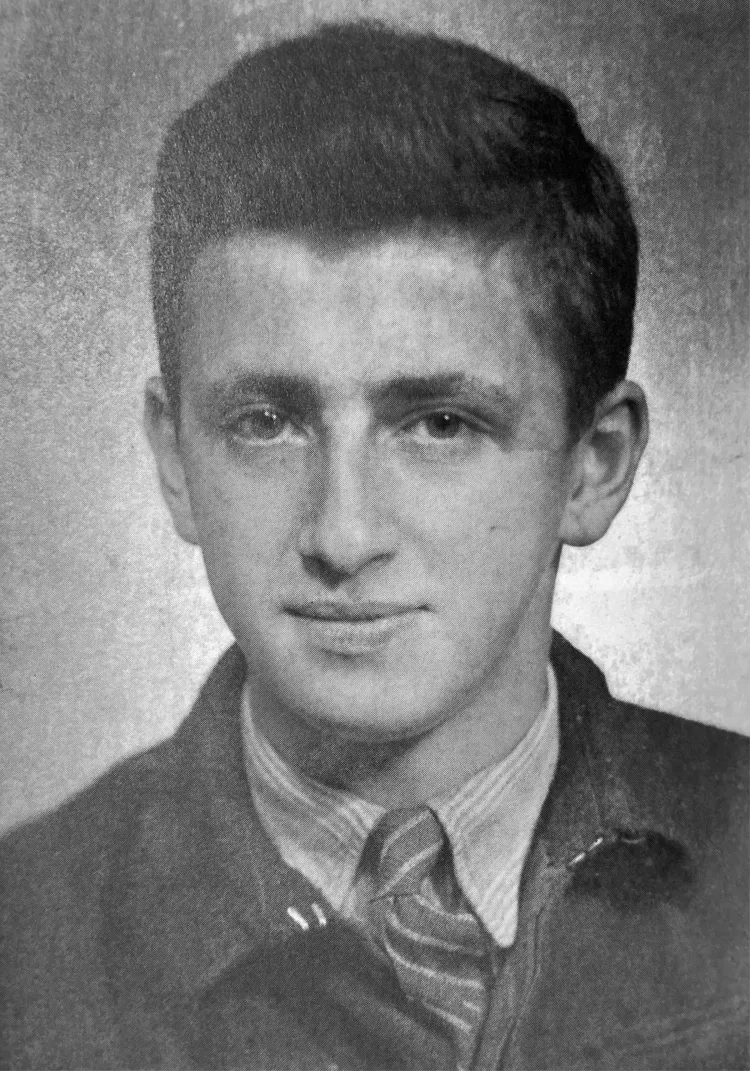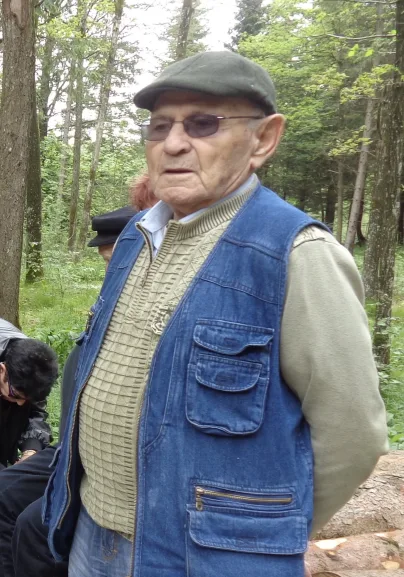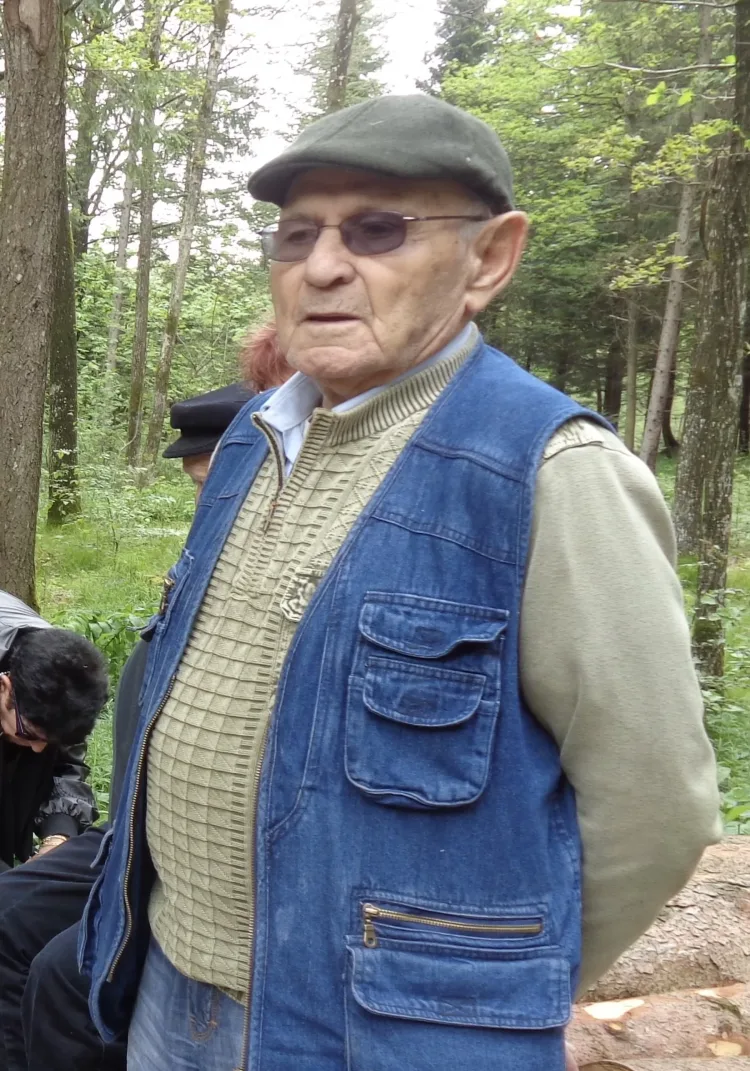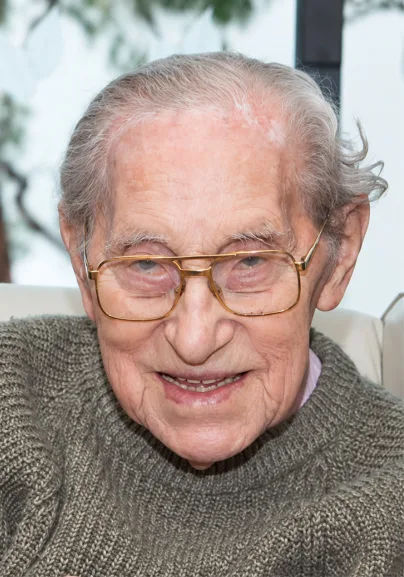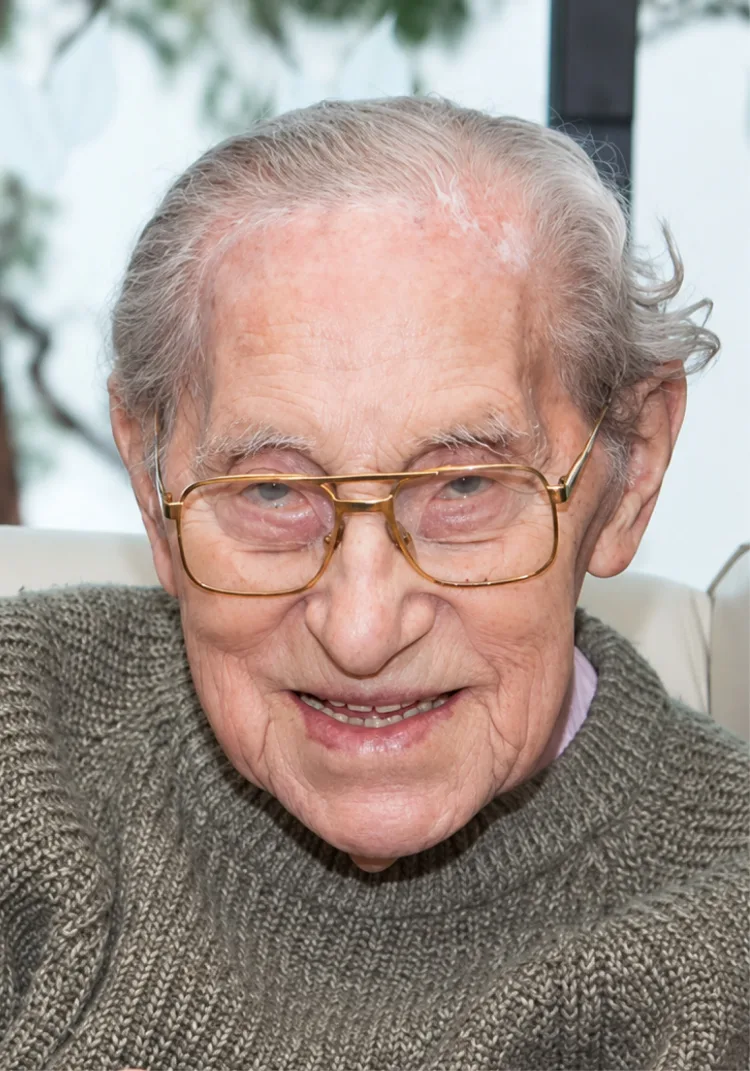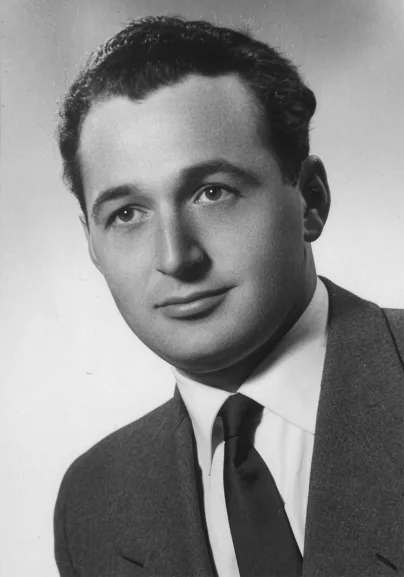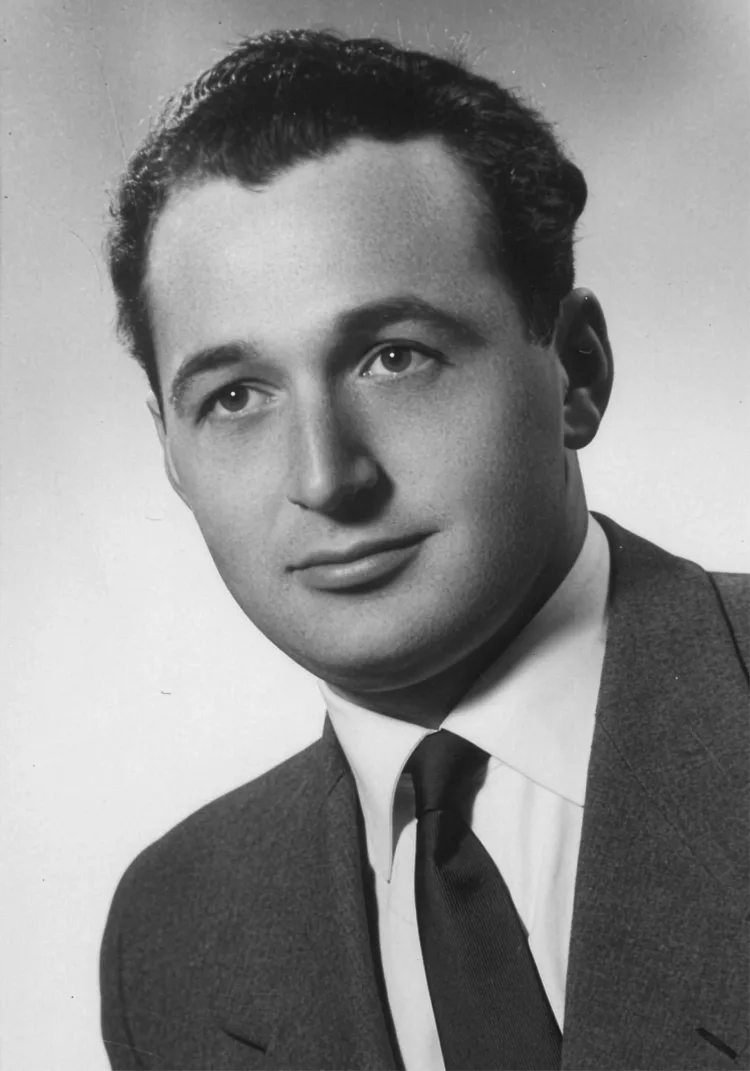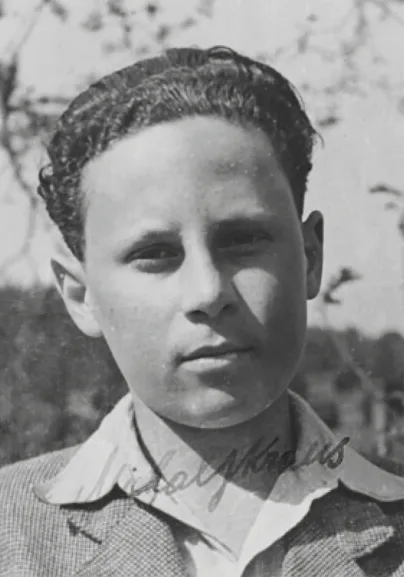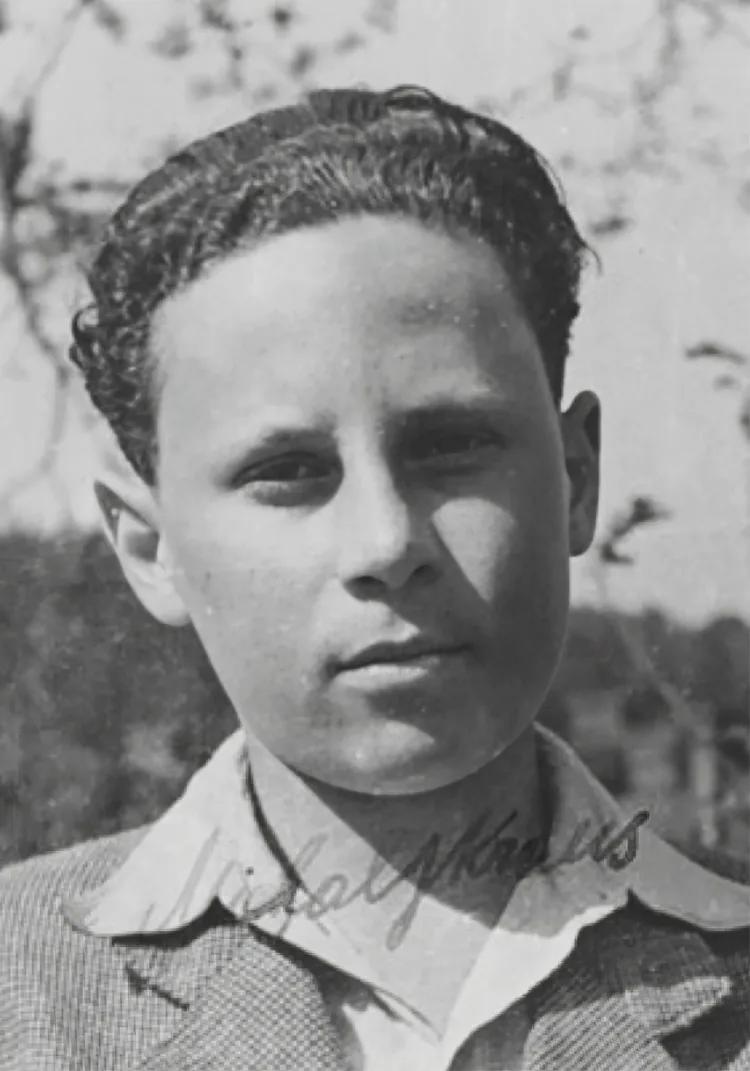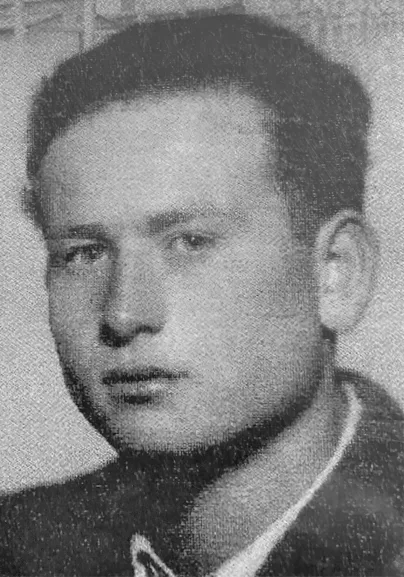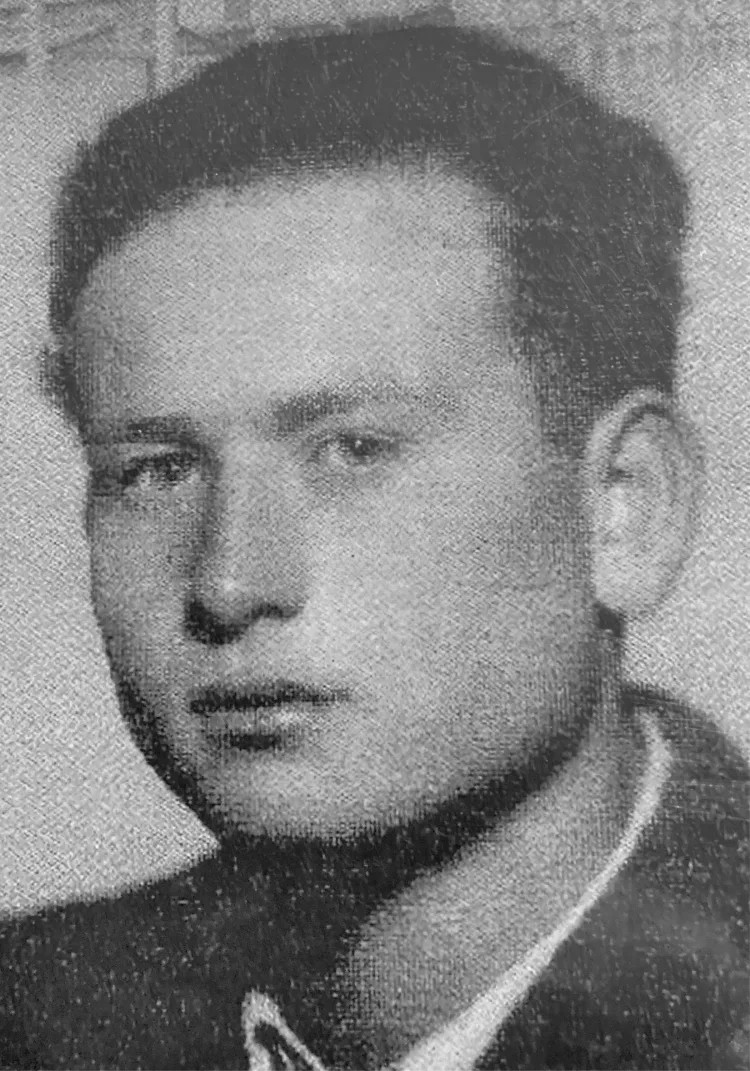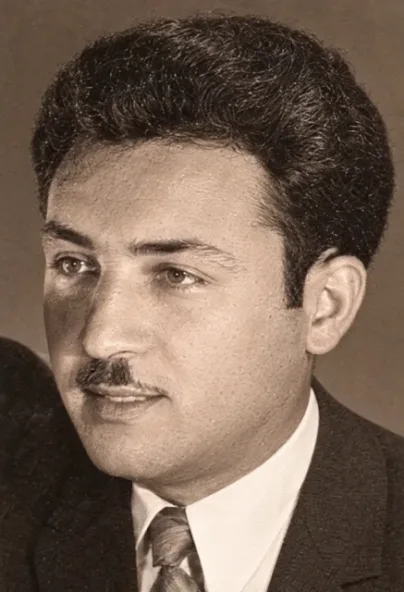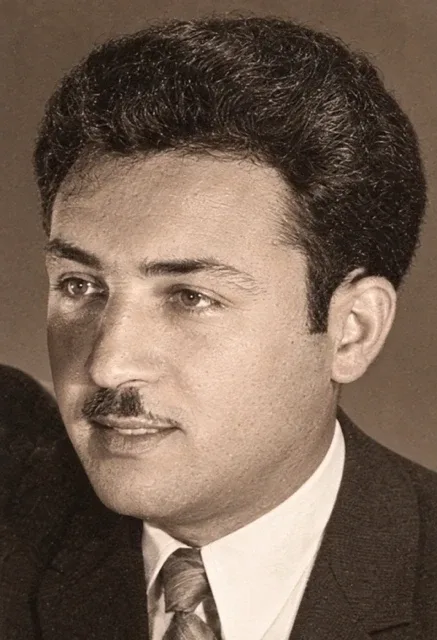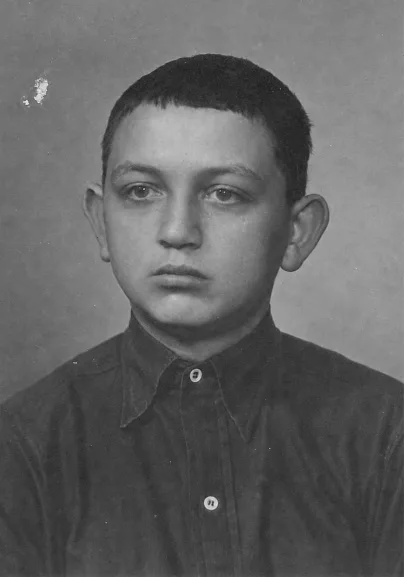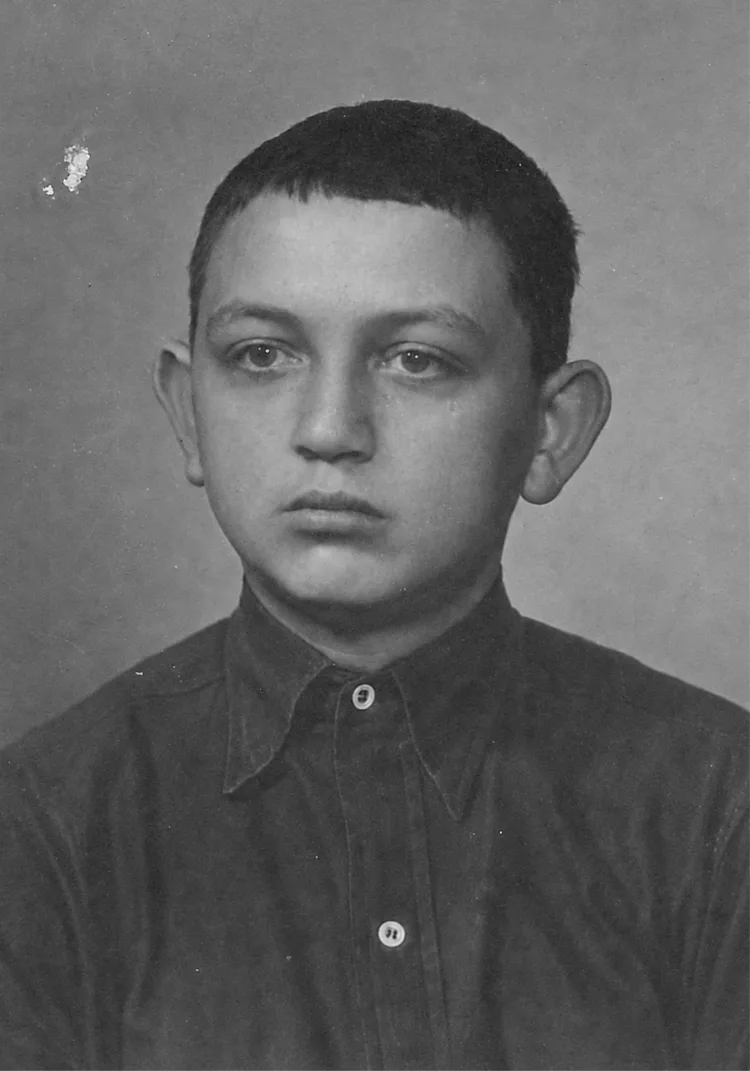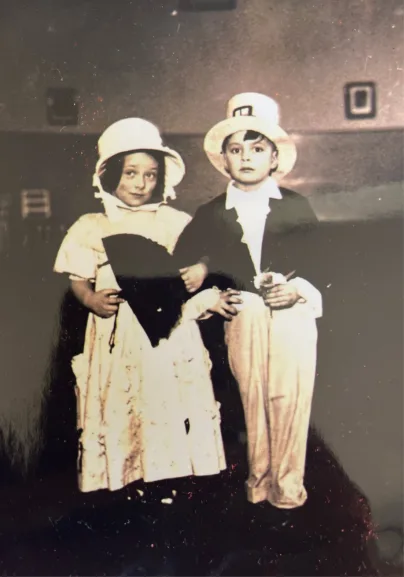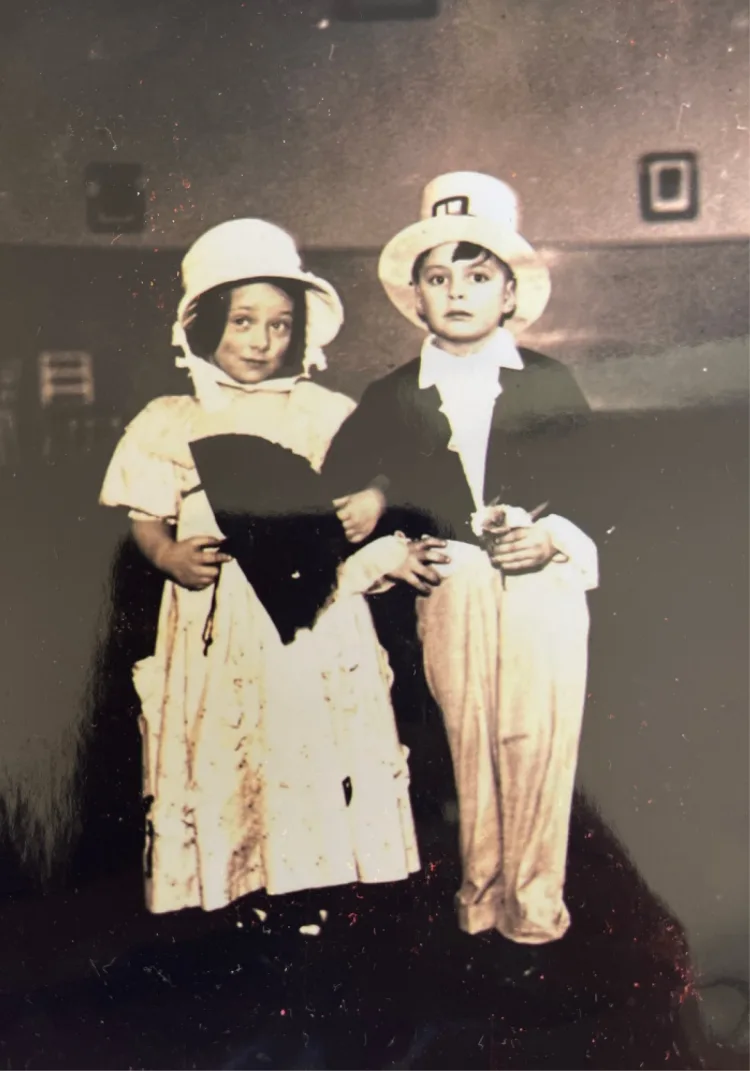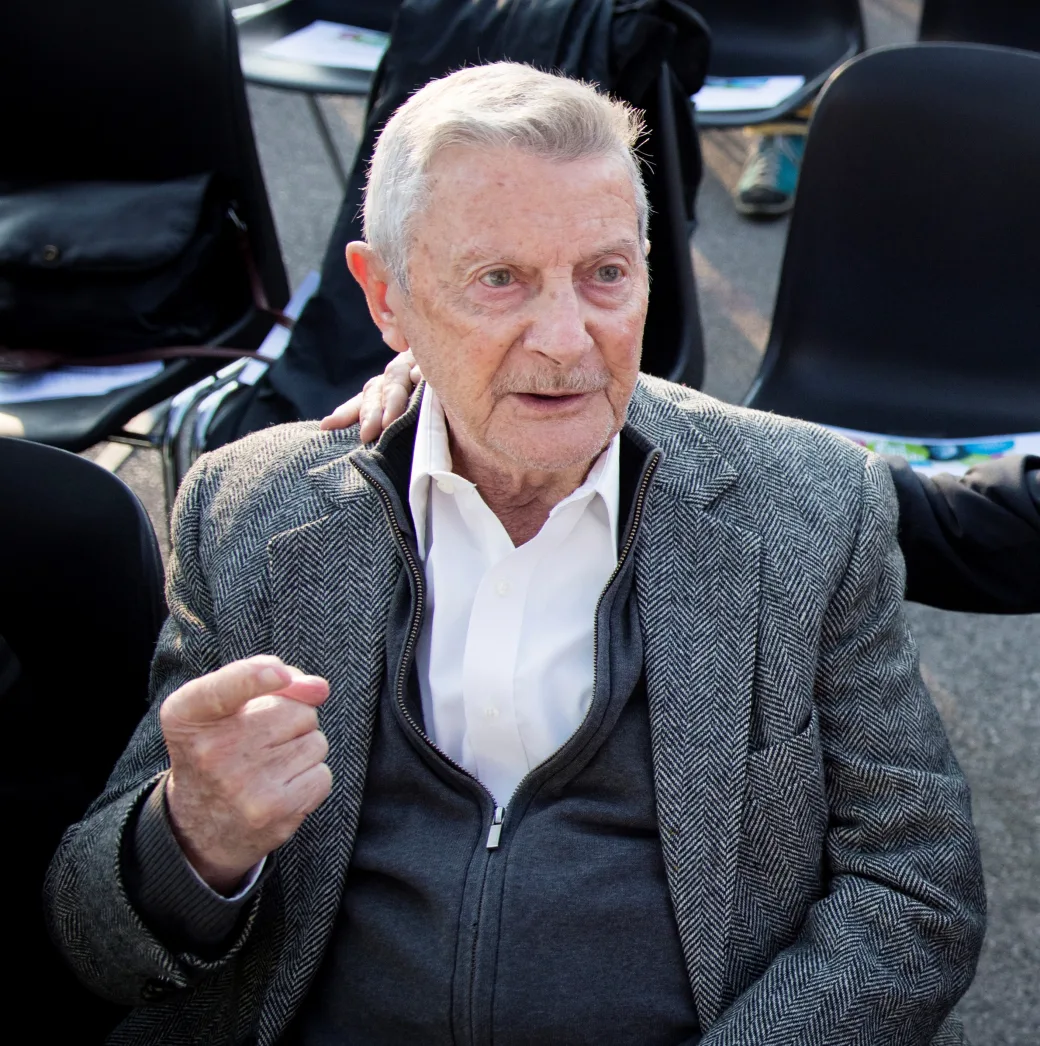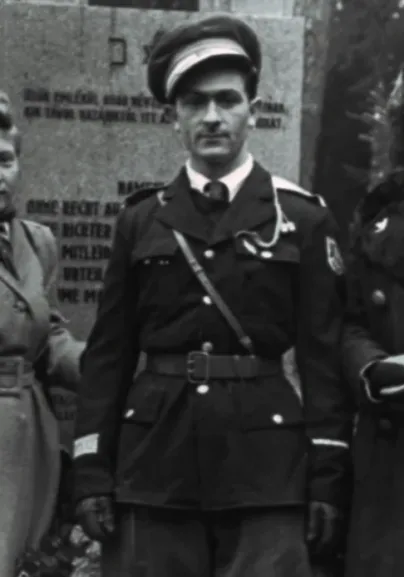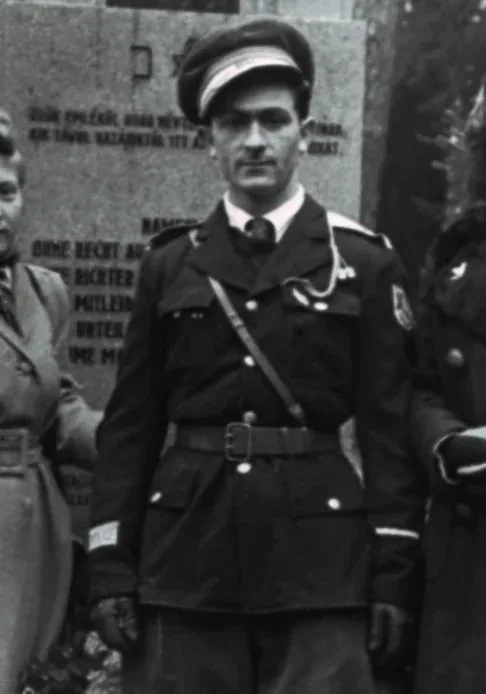
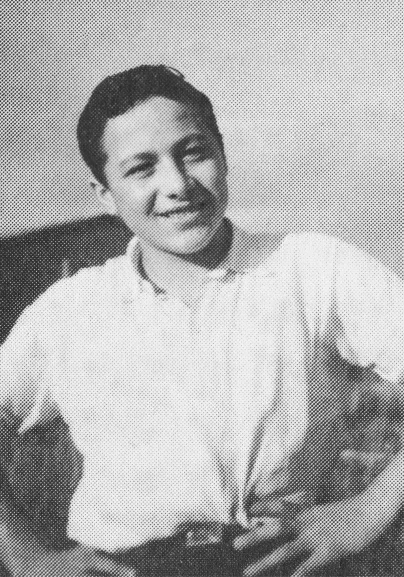
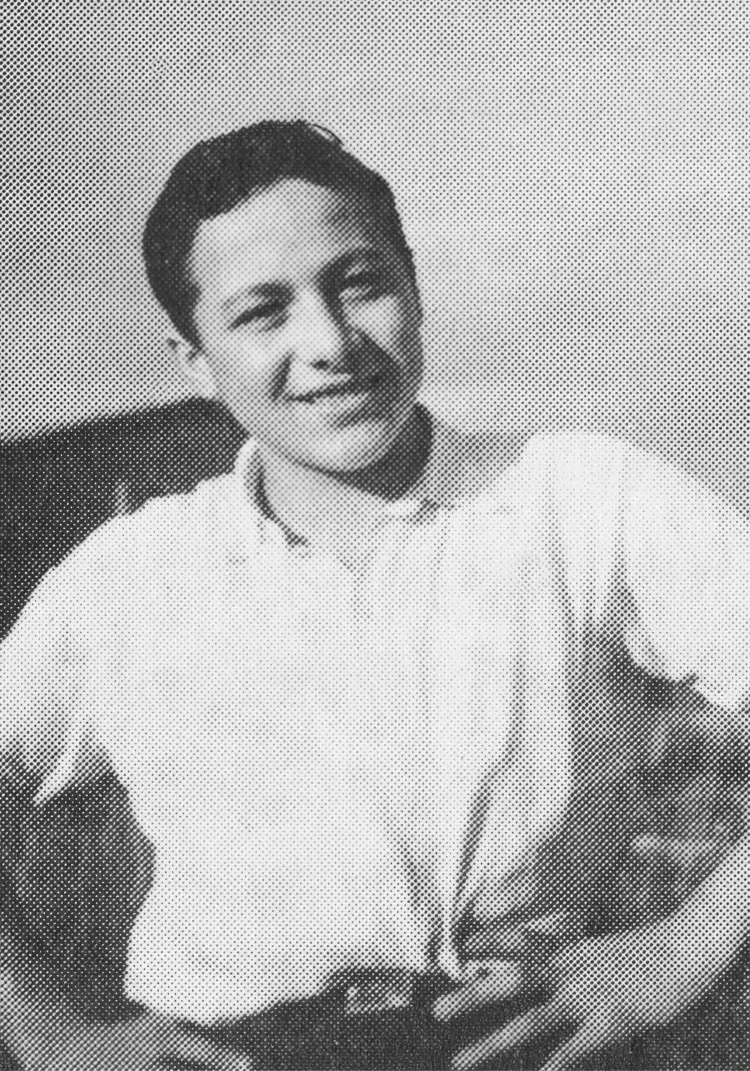
Wolfgang Sinai Adler was born into an Orthodox Jewish rabbi’s family in Prague on 11 July 1928. His father, Dr Šimon Adler, came from Dobrá Voda in the Bohemian Forest. He was a Jewish scholar, rabbi, historian and the director of the archives of Prague’s Jewish community. Wolfgang’s mother Reisel was the daughter of Rabbi Sinai Schiffer, a Jewish scholar from Karlsruhe. Wolfgang was the youngest of three brothers and attended both Jewish and Czech schools. His family mainly spoke German at home. Wolfgang’s second eldest brother died in 1937.
When the Nazis invaded and occupied Czechoslovakia in March 1939, Wolfgang’s life changed dramatically. From then on, Jews had to wear the yellow Star of David. Jewish children were no longer allowed to go to school and there were signs everywhere reading ‘Für Juden verboten’ (‘No Jews allowed’). The Adler family wanted to emigrate, but only Wolfgang’s eldest brother, the young Matisyahu, managed to leave the country and travel to what was then Palestine.
On 6 March 1943, the then 14-year-old Wolfgang was moved to the Theresienstadt ghetto with his parents. Wolfgang worked in a bakery in the ghetto and this meant that he was able to get bread for his sick parents. On 18 May 1944, the Adler family was deported to Auschwitz-Birkenau extermination camp in a cattle car with 2000 other residents of the ghetto. On his arrival there, Wolfgang had the number A1450 tattooed on his left forearm.
The Adlers were committed to the ‘Czech family camp’, which served the Nazi propaganda machine as it enabled them to pretend to the world that Jews were being treated well. But in July 1944 it was closed and Wolfgang’s parents were killed. Wolfgang was selected by Mengele with 89 other Czech boys and forced to carry out cleaning work in the SS barracks and work as an errand boy for the SS. Later, he was moved to the Pławy satellite camp, an SS supply camp, and ordered to look after the horses.
With the Soviet army’s advance and the start of the death marches in Auschwitz-Birkenau, the SS supply camp was also evacuated and everything was loaded onto horse-drawn carts. Wolfgang had to walk while the SS officers rode on the carts. Bodies of prisoners who had been shot or frozen to death lay by the side of the road. There were was nothing to eat for days. Finally, the SS locked the prisoners into cattle cars bound for Mauthausen concentration camp, where they arrived on 23 February 1945 after a three-week odyssey.
While they were being admitted to the camp, Alois Holub, a Czech prisoner, spotted Wolfgang, who was at that point completely dehydrated. The 27-year-old Holub had been imprisoned in the concentration camp since 1941 because of his Communist activities. But his training as a cabinetmaker meant that he enjoyed preferential treatment in the camp and carried out inlay work for the SS officers. He regularly smuggled extra soup and bread to the Jewish boy. This saved Wolfgang’s life and he, in turn, shared the food with other Czech boys. When Wolfgang was moved to the tent camp in early April 1945, Holub secretly gave him a woollen sweater with paper and a pencil wrapped inside it and whispered to him: “Write to me when you need something!”
When Wolfgang was suffering with severe diarrhoea and a high fever in the tent camp, he managed to successfully smuggle five secret messages out of the tent camp. He asked Holub for a spoon, bread, soup, salt and even charcoal tablets. Without these supplies he would not have survived the tent camp in Mauthausen – or the subsequent death march to the Gunskirchen satellite camp and the appalling conditions there, which he later described as the worst time of his life.
After the liberation on 5 May, Wolfgang left the camp with Jehuda Bacon. They were picked up by the American soldier Stanley Leeper on the road to Lambach and taken to the hospital in Steyr. After their recovery, they returned to Prague and were looked after at Štiřín Chateau by the teacher Přemysl Pitter. When they spoke on the telephone, Holub, who had also returned to his home country, offered to care for Wolfgang as if he was his own son. But Wolfgang wanted to join his brother in Palestine. After the Communist Party took control of Czechoslovakia, Wolfgang and Holub lost touch.
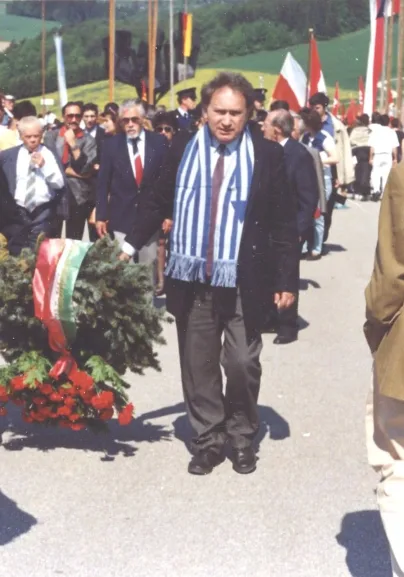
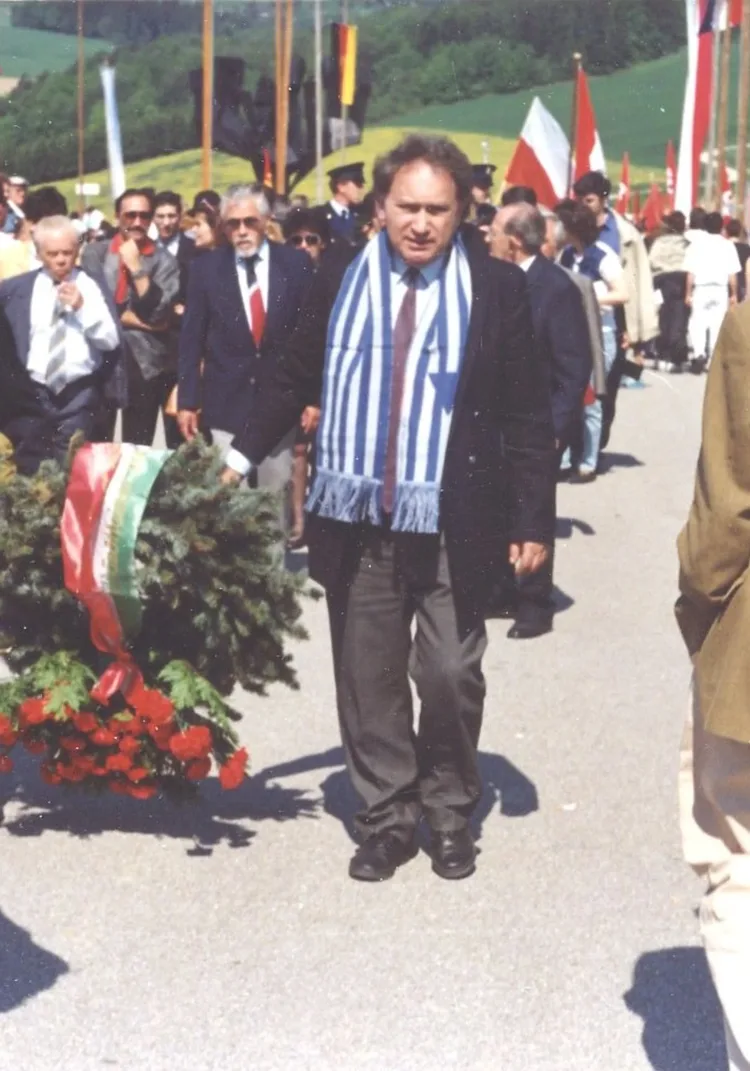
In his new homeland of Israel, Wolfgang changed his name to Sinai Adler. He studied at a prestigious yeshiva [Jewish higher educational institution for studying the Torah] and became a highly respected scholar and rabbi. He served as the Chief Rabbi of the city of Aschdod for 20 years. But he never forgot what Alois Holub had done for him. When the Iron Curtain fell, he got in touch with Holub. Holub had kept Wolfgang’s messages from the tent camp all those years and now he gave them back to him. Alois Holub was honoured by the Holocaust memorial institution Yad Vashem in 1994 as ‘Righteous Among the Nations’ at the initiative of Sinai Adler and Jehuda Bacon.
Rabbi Sinai Adler spent the final decades of his life in Mevasseret Zion near Jerusalem and died on his 92nd birthday on 11 July 2020 surrounded by his family.
Source
- Sinai Adler, Your Rod and Your Staff. A Young Man’s Chronicle of Survival. Jerusalem 1996; AMM OH/ZP1/703, interview by Kobi Kabalek with Sinai (Wolfgang) Adler, Mevasseret Zion 2002.