Shaul Spielmann
Shaul Spielmann – On the grounds of the former satellite camp, in the area of the barracks
Source: Interview Shaul Spielmann

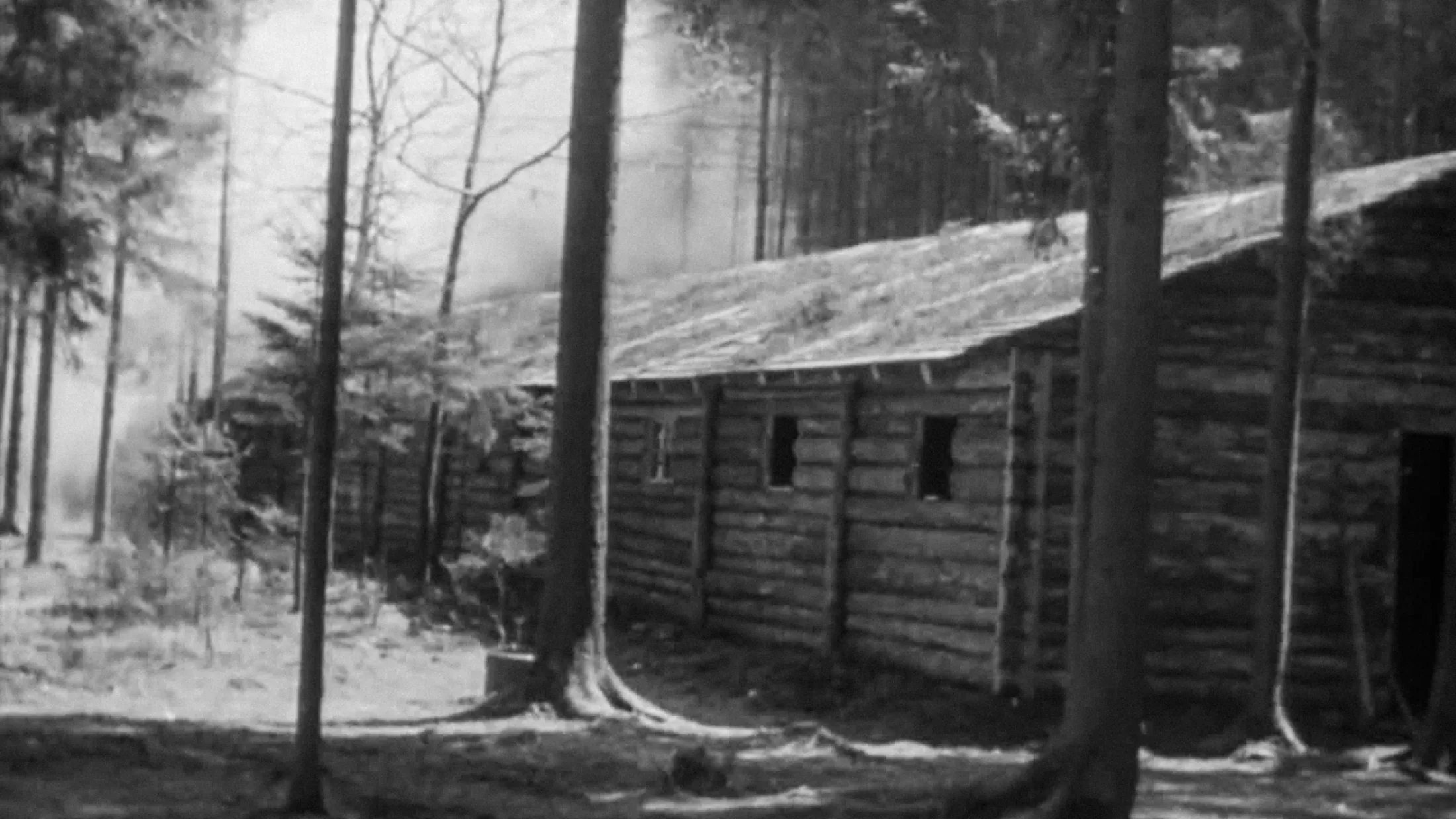
Station 2
Accessed at United States Holocaust Memorial Museum, courtesy of National Archives & Records Administration, film still 00:04:20
“There is always a worse hell. […] But there is no doubt that we have been sent here to die.”
Edith Eger 1
At the end of 1944, the Gauleiter (district leader) August Eichgruber ordered the construction of an SS-Notbehelfsheim (SS emergency shelter) with eleven barracks in the piece of woodland known as the ‘Hochholz’ in the municipality Edt bei Lambach near Gunskirchen.
Around 400 prisoners from Mauthausen concentration camp were housed in the former primary school in the centre of Gunskirchen in order to carry out the construction work. The building was fenced off and placed under strict guard. The concentration camp prisoners were marched into the forest each day, where they had to build barracks, fell timber and transport materials. The route between the school and the building site was patrolled by SS guards during the daily forced march.
The conditions were extremely tough: the days were marked by hunger, exhaustion and abuse. In the first few weeks alone, 30 people died as a result of the forced labour. Once the construction work on the satellite camp in the forest had been completed, the concentration camp prisoners housed in the primary school were deployed to carry out other lumbering work in the surrounding area.
At the end of March 1945, the satellite camp that was still under construction was converted into a collection point and reception camp for around 20,000 concentration camp prisoners. The majority of them were from Hungary and the territories occupied by Hungary of Czechoslovakia, Romania and Carpathia, but also Poland, France, Belgium, Lithuania and other European countries. They were driven on death marches from other labour camps and concentration camps to the tent camp at Mauthausen concentration camp and from there on to Gunskirchen satellite camp. At this point, the barracks were still unfinished and there was a major lack of sanitary facilities. Each of the wooden barracks in the forest camp was originally designed for 300 prisoners. In the end, however, they had to hold between 2500 and 3000 people. The overcrowding meant that the only way the prisoners could sit was tightly squashed against one another.
The camp in the forest was difficult to reach and was deliberately built in a concealed location. At the same time, it remained part of a visible system of violence given the prisoners’ daily march from the primary school to the forest during the construction phase and the death marches that took place across the region.
The number of fatalities at the Gunskirchen forest camp is estimated at around 3,500.
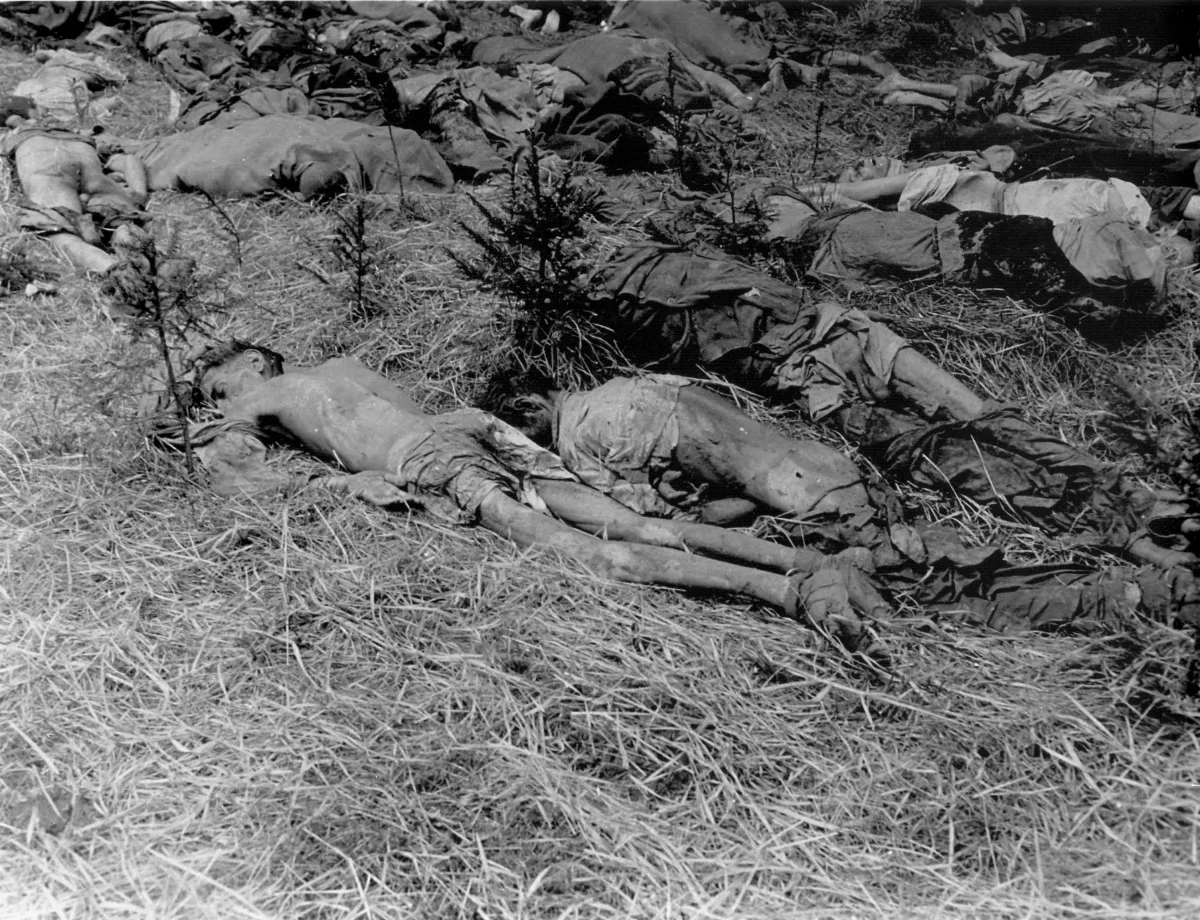
Guard duties at the satellite camp were carried out by members of the SS and police and fire brigade units from Vienna. After the war, the camp commander Heinrich Häger and construction supervisor Paul Anton Kaiser were sentenced to death at the Mauthausen concentration camp trial in Dachau and executed in 1947.
References
The order to build a camp in the piece of woodland known as the ‘Hochholz’ in the municipality of Edt bei Lambach was issued by the Gauleiter (district leader) of the Reichsgau Upper Danube (Reichsgau Oberdonau) August Eichgruber to the then mayor of Gunskirchen and Edt bei Lambach, Franz Hochhuber, in December 1944. The plan was to build an SS-Notbehelfsheim (SS emergency shelter) with eleven barracks in the forest.
Construction of the camp probably began at the end of December 1944. The precise date has not been pinpointed; other sources mention 12 and 28 March 1945.1 Contemporary witnesses interviewed in the early 1970s mentioned that the first prisoners who were to be deployed to build the camp in the forest arrived at the Gunskirchen Volksschule (primary school) building as early as December 1944.2
The four landowners of the areas of woodland in question were forced to give up their land, fell the trees there and take the wood to the mayor’s sawmill – with this work being carried out by the concentration camp prisoners. This wood was then to be used to build the barracks.3
Many of the satellite camps of Mauthausen concentration camp were built close to armament factories, power stations, infrastructure projects or other facilities that were important to the war effort so that the prisoners could carry out forced labour there. It has not been possible to definitively establish the specific purpose of Gunskirchen satellite camp. In his research, Peter Kammerstätter reports, referencing an account given by a resident of a nearby town, that there were plans to relocate a production facility of the Brevillier & Urban company that manufactured screws for the arms industry to this area of woodland and use concentration camp prisoners there to carry out slave labour.4 However, it has not been possible to find documentary evidence to support this assertion.
Another possible reason for the location of the Gunskirchen satellite camp could be the proximity to the Wels II satellite camp and the aircraft and metal plants located there, and also the increasing bombing of the arms industry.5
The Gunskirchen municipal chronicles state that the then mayor and sawmill owner Franz Hochhuber received the order from the district leadership of Linz “to fell a large quantity of timber in the nearby ‘Hochholz’. The concentration camp prisoners housed in the school were to carry out this work. The plan was to construct ten large wooden barracks [note: other sources mention eleven planned barracks] that would be used to accommodate evacuated armaments manufacturing from the Niederdonau (Lower Danube).”6
The nearby Westbahn (western railway line) station ‘Gunskirchen’ lent its name to the camp in the municipality of Edt bei Lambach. The frequently used term ‘forest camp’ refers to the location of the camp in the piece of woodland known as the ‘Hochholz’ in the municipality of Edt bei Lambach near Gunskirchen’.7 Besides the forest camp, another part of Gunskirchen satellite camp was the part in the Volksschule, which was also in operation until the liberation on 4 May 1945.
Polish, French, Belgian and Russian prisoners8 from the Mauthausen stalag camp, all men and boys, were housed in the old Volksschule (primary school) in the centre of Gunskirchen to build the camp in the forest. From there, they were marched into the ‘Hochholz’ part of the forest every day to build the forest camp. The building detachment that initially comprised around 200 prisoners was expanded to around 400 concentration camp prisoners at the beginning of 1945. The work detail commander was SS-Hauptscharführer (Head Squad Leader) Heinrich Häger and the supervision of the works was the responsibility of SS-Unterscharführer (Junior Squad Leader) Paul Anton Kaiser.9
The former primary school in the centre of Gunskirchen was surrounded with barbed wire and guarded by four towers that were manned at all times.10 The precise number of guards is not known and is quoted as being between 80 and 150 individuals from the SS and the Wehrmacht. Local civilians were forbidden from entering the school. Despite this, one individual, potentially a caretaker or a teacher – the Gunskirchen chronicles refer to a “school caretaker”11 – apparently lived in the school building together with the concentration camp prisoners.
The prisoners were accommodated in three rooms around 80 m² in size, where they slept on straw mattresses. There were two rooms available for the guards. There was also a kitchen and sanitary facilities available in the building. As can be seen from statements by SS officer Heinrich Häger, the prisoners were much better looked after in the camp in the Volksschule than in the forest camp. Häger stated that he attempted to supply sick prisoners from the building detachment with medicines. But he was prohibited from bringing in a doctor from among the local residents by the commanders of Mauthausen concentration camp.12 Sick concentration camp prisoners were taken to Mauthausen stalag camp.13
The prisoners were divided into two detachments: a building detachment that was tasked with building the camp and a timber felling detachment. The timber felling detachment not only had to clear the site of the future camp but other nearby areas of woodland as well. They then had to transport the timber to Bürgermeister (Mayor) Hochhuber’s sawmill and bring the cut planks back into the forest again so they could be used to build the barracks. According to the accounts of the former prisoner Tibor Wiener, these barracks were up to 90 metres long.14 The timber felling detachment in the school also continued to exist after the construction of the forest camp was completed – the prisoners were still used for other lumbering work.15
The prisoners were marched to the forest and back to the school again every day. On this march, the prisoners were guarded by numerous armed members of the SS. However, according to statements by SS officer Paul Anton Kaiser, the guards in the school and those in the forest didn’t have any contact with one another. According to Kaiser, the detachment that was tasked with felling timber comprised around 50 prisoners. They left Gunskirchen towards 7 a.m. and returned from the forest towards 6 p.m.16 The Gunskirchen chronicles describe individual acts of assistance by local residents, who would hide food along the route taken by the concentration camp prisoners or in horse blankets in the farmers’ carts used to transport timber.17
The prisoners had to carry out their forced labour in absolutely appalling conditions. The Gunskirchen municipal chronicles report: “These concentration camp prisoners were a pitiful sight marching to their place of work in the mornings and back again in the evenings. On a fairly frequent basis, one of them would collapse during the march from hunger and exhaustion. They would then be hauled along on their comrades’ shoulders as the march would not be stopped on their account. However, the way these people were treated by their own prisoner functionaries, the ‘Kapos’, was even worse than their treatment by the SS guards. Sometimes these people were also simply shot on the grounds of a minor transgression or an alleged escape attempt. […] At midday, the thin water gruel was taken to them in the forest in kettles.”18
In just the first few weeks of the construction phase, 30 people lost their lives as a result of these terrible conditions.19
“When we left Mauthausen, we couldn’t imagine that things could possibly be even worse in the new camp. But it turned out that Gunskirchen surpassed even Mauthausen in terms of its awfulness.”
Stephan Virányi 20
Before the camp in the ‘Hochholz’ was finished, it was converted into a collection point and reception camp for thousands of prisoners from Mauthausen concentration camp at the end of March 1945. These prisoners, who were largely Hungarian Jews, were driven from the forced labour camps for the construction of the Südostwall along the border between Austria and Hungary to Mauthausen stalag camp in death marches in response to the Soviet Red Army’s advance, and then from there on to Gunskirchen. The death marches took place in April 1945. The Wels district police force chronicles mention the arrival of thousands of concentration camp prisoners from the Mauthausen stalag camp on 17 and 28 April 1945, while the Gunskirchen municipal chronicles report an arrival of prisoners on 18 April 1945.21 When the prisoners arrived, only one of the barracks had concrete foundations, the roofs of the barracks were not finished and there was no kitchen, water supply, sewer or sanitary facilities. Only the electric fence and two latrines were completed.22 The camp in the Volksschule (primary school) continued to exist in parallel to the camp in the forest.23
“Was this the camp? Impossible! Crowded together, we sat on the bare floor. Soon we were asleep—without food, soaked, terribly disappointed. Yes, this was the camp of the dead, forgotten among the trees of a dense forest, without air and without sun. Huge puddles surrounded the barracks. In the back, a primitive latrine, that was all.
[…]
It was hopeless. We wept from the hopelessness, the cold and the hunger. The pouring rain soaked everything, and the sun never shone.”
Michael Kraus 24
The concentration camp satellite camp was built in a dense pine forest so that it would be very hard to spot from the air. A single road, approximately four kilometres long led from the main road to the camp in the centre of the forest, described by former concentration camp inmate Pal Bacs as a “primordial forest”. The remote location was apparently chosen so that the local residents of Gunskirchen would have no idea about the camp’s existence or at least about the conditions there.25 However, this explanation is contradicted by the fact that the prisoners used to build the camp were housed in the Volksschule in the centre of the town and marched to the forest each day, and also by the death marches through the town. The Gunskirchen chronicles also state that shots were regularly heard along the road between Gunskirchen and Wallnsdorf.26
As mentioned, it has not been possible to definitively establish the satellite camp’s originally intended function. The Gunskirchen municipal chronicles report that there were plans to move a military production site from Niederdonau (Lower Danube) to Gunskirchen. Other sources refer to a planned relocation of arms manufacturing from Neunkirchen27; a resident of a nearby town reported that there were plans to relocate a production facility of the Brevillier & Urban company that manufactured screws for the arms industry to this area of woodland and use concentration camp prisoners there to carry out slave labour.28 The proximity to the Wels satellite camps must have also been a factor in the choice of location. It may be assumed that the camp was originally intended for arms manufacturing.29 But it was not used for these purposes.
In early April 1945, 17,000 to 20,000 Hungarian Jews from the Mauthausen, Gusen, Melk and Vienna-Floridsdorf concentration camps and the camps for the construction of the Südostwall were driven to the forest camp near Gunskirchen in death marches lasting three days. The camp built there became a collection point and reception camp for more than 20,000 people, almost all of whom were Jewish. The majority were from Hungary and the territories occupied by Hungary of Czechoslovakia, Romania and Carpathia, but also Poland, France, Belgium, Lithuania and other European countries.30 Many of them had already been prisoners in the Mauthausen-Gusen concentration camp system or other concentration camps for several years.
“The sun now illuminates an incredible scene: a gathering place for Jewish prisoners. In the final stages of the war. It is a primitive final destination for all the human wrecks who’ve managed to drag themselves here. An unimaginably huge effort, that was perhaps entirely pointless.”
Therese Müller 31
An aerial picture taken by a U.S. intelligence unit on 20 April 1945 shows the concentration camp in the forest on the road leading from the main road Bundesstraße 1 near Gunskirchen towards the south in the direction of Saag. The satellite camp was a few hundred metres south of the main road. The areas for the barracks had just been roughly cleared, otherwise all you can see is forest. The fact that the camp wasn’t yet finished can also be seen from the aerial picture.
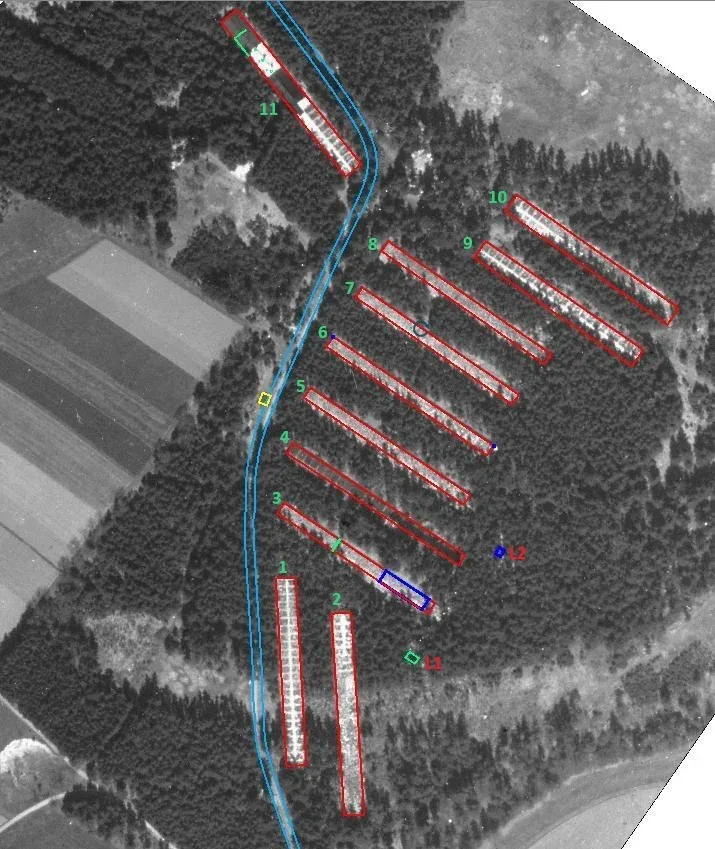
Barracks 1 and 2 were positioned to the south of the camp in a north-south direction. Barracks 3 to 8 lay to the north at a roughly 45 degree angle and these were all positioned with their narrow end towards the road to Saag. In parallel to these, but also positioned slightly to the southeast, were barracks 9 and 10. The wooden barracks were very low and had no reinforced floor inside. The SS and kitchen barracks were on the other side of the road. The barracks were between 6 and 10 metres wide and spaced about 20 metres apart. All the barracks were around 90 metres long. The remains of the foundations of the SS and kitchen barracks can still be seen and also the oven inside. On the aerial picture, the SS and kitchen barracks are the same size and shape as the prisoner barracks. The roofs of barracks 1, part of 2, 8 and 9, and also part of the SS barracks were not yet complete at the time the aerial picture was taken.
Two concrete latrines can still be seen on the site of the Gunskirchen satellite camp today. The system used was one involving sewage ditches that were spread across the site, only meeting the most basic hygiene standards. There were five planks with four holes in them across each of the latrines.32
Helene Balsam – The concentration camp: The Barracks
Hugo Gryn – The concentration camp
Shaul Spielmann – The concentration camp
There was incredible overcrowding in the Gunskirchen satellite camp and in the temporary barracks. There was hardly any water and there were no facilities for washing. In his descriptions of the camp, the prisoner Pal Bacs said that there was a water tank next to the main road towards Saag. The individual wooden barracks in the forest camp were originally designed for 300 prisoners. In the end, however, they had to hold between 2500 and 3000 people. The overcrowding meant that the only way the prisoners could sit was tightly squashed against one another.
Nicholas Halmay – The concentration camp
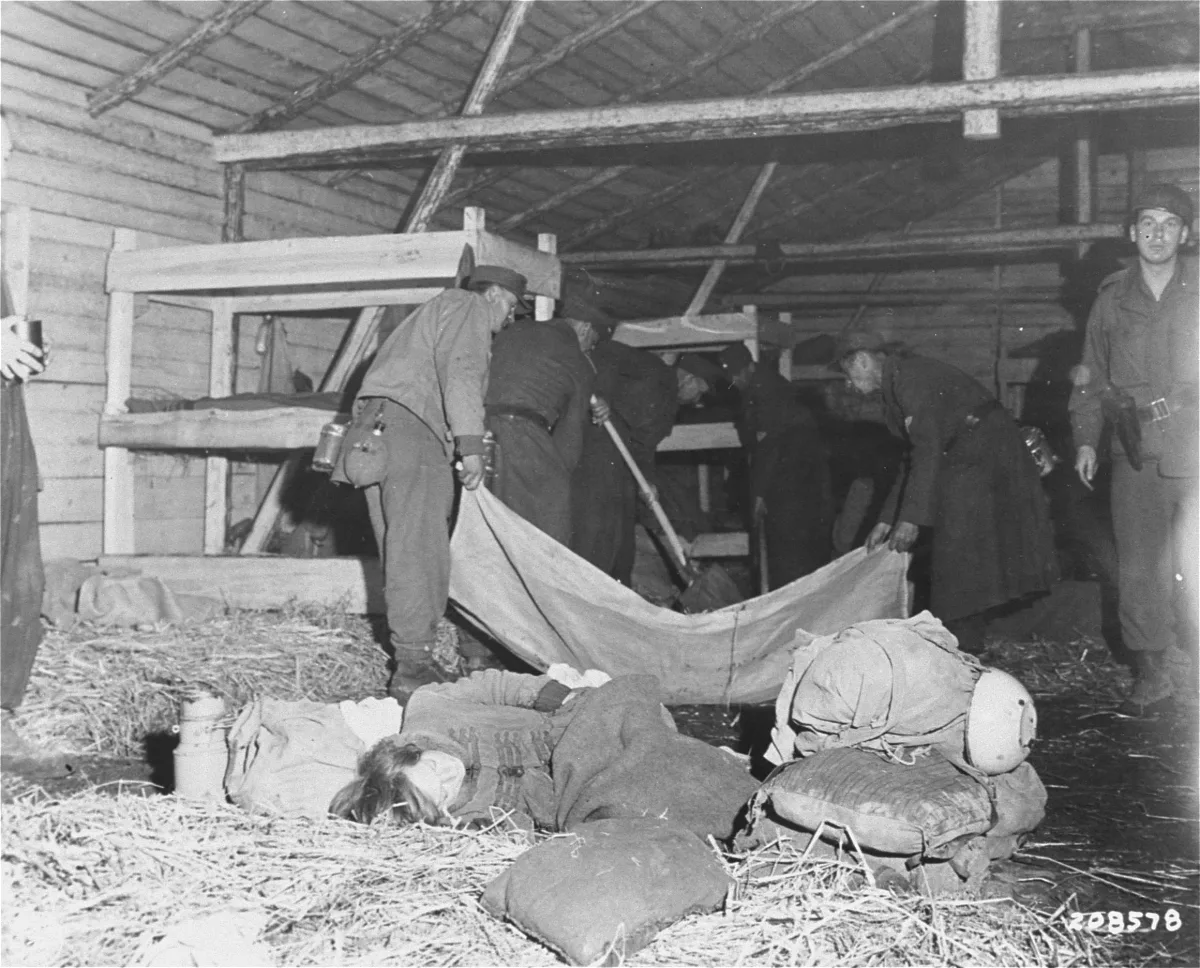
According to the records of the liberators from the 71st Infantry Division of the U.S. Army, the majority of the prisoners were from Hungary. This report states that there were also political prisoners from Germany, Austria, the former Czechoslovakia and the former Yugoslavia in the camp. There were apparently doctors among the prisoners, who would look after the sick.33 The Gunskirchen chronicles also mention numerous university professors, lawyers and engineers, including from Romania and Poland.34
“I knew from the first moment that we arrived at an extermination camp, because we were registered only upon arrival. After that nobody cared about us anymore. We did not have to work. Only those worked who collected the dead and buried the bodies.”
Joseph Fischer 35
Estimates of the total number of deaths at Gunskirchen concentration camp vary, but they range between 2500 and 6500.36 It can be assumed from Andreas Kranebitter’s estimates that there were 3382 dead in Gunskirchen concentration camp and a further 1000 dead along the route from Mauthausen concentration camp to Gunskirchen concentration camp.37 According to historians, of the 17,000 to 20,000 prisoners who were deported to Gunskirchen, around 13,500 survived.38
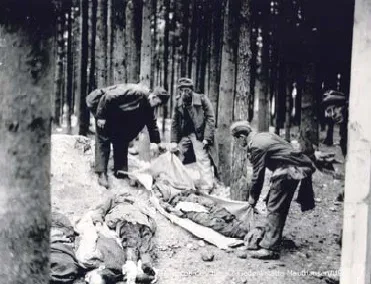
Some of the countless dead from Gunskirchen satellite camp were buried in mass graves but often the corpses were left lying on the roads through the camp. According to the American liberators’ estimates, around 3000 bodies were found in the camp – either buried in mass graves or not even buried at all.39 After the liberation, another 1031 former concentration camp prisoners died in the hospital in Wels and they are buried in the cemetery in Wels.40
Helene Balsam – The concentration camp: The hell in the forest
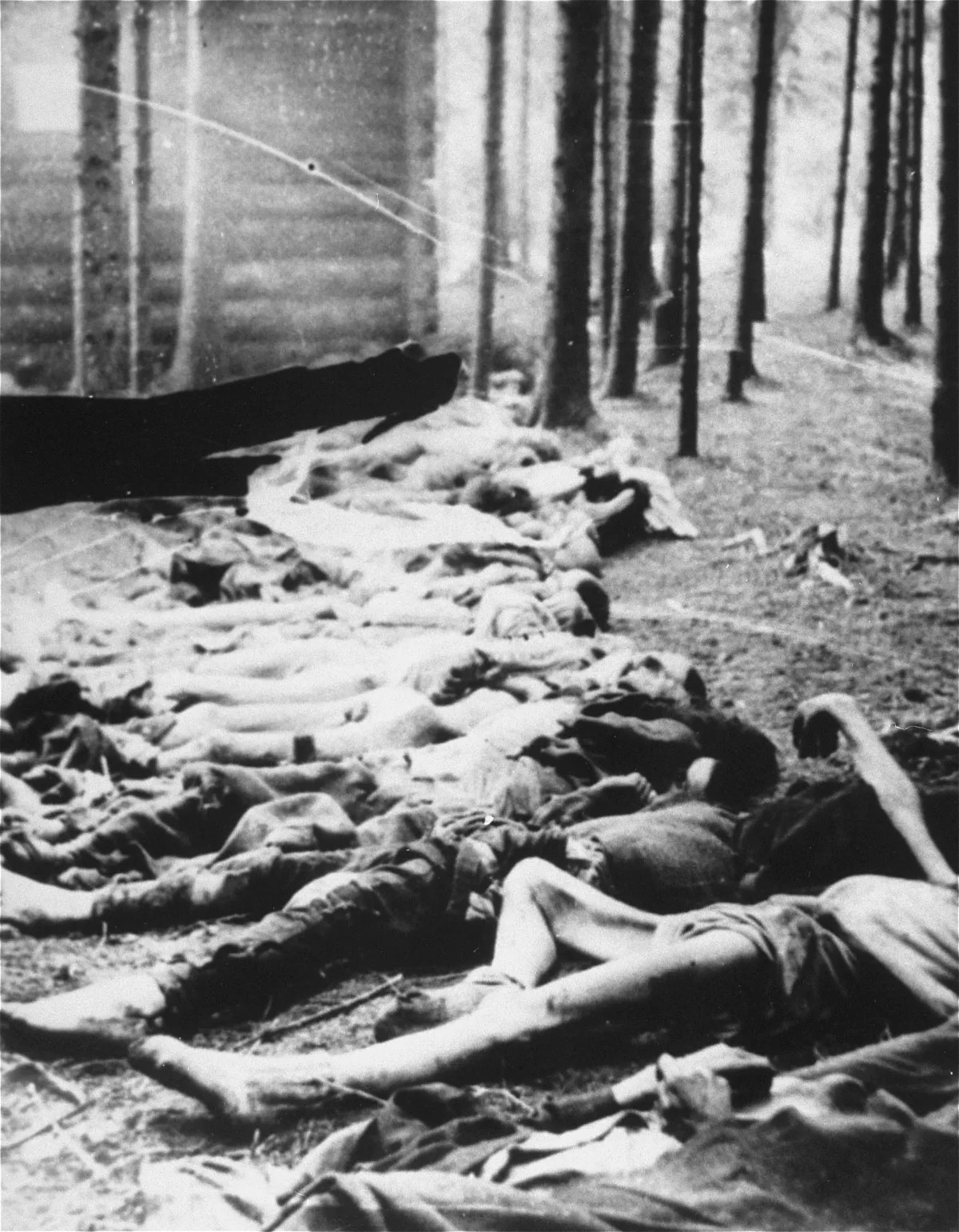
The running of the camp was probably carried out by Heinrich Häger und Paul Anton Kaiser; there was no doctor in the forest camp in Gunskirchen. Guard duties were largely performed by police officers and firefighters from Vienna. Heinrich Häger came to Gunskirchen at the end of December 1944 and was the deputy work detail commander until the camp was liberated. In this role, he was responsible for the building of the camp and for organising the guard units. He was sentenced to death at the Mauthausen concentration camp trial in Dachau and executed in 1947.
Paul Anton Kaiser was tasked with the supervision of the works at Gunskirchen satellite camp in 1944 and was responsible for the construction work until the middle of February 1945. He then took over the organisation of the timber felling detachment stationed at the school. According to his own statements, he never set foot in the Gunskirchen forest camp. He too was sentenced to death at the Mauthausen concentration camp trial in Dachau and executed in 1947.41
One individual who lived nearby and was interviewed after the war described the guard units as follows: “Apart from the officers, the SS guards were all men aged between 55 and 65 who were too old for the military. They all lived in the administration barracks. There weren’t that many of them. They kept to themselves. The officers were accommodated in the school in Gunskirchen. […] The majority of the guards were from Upper Austria. They were visited by their families at the weekends if circumstances allowed it. They were all well aware that the war would soon be over. They had already stashed civilian clothes away here.”42
References
Shaul Spielmann – On the grounds of the former satellite camp, in the area of the barracks
Source: Interview Shaul Spielmann
Explore individual locations in three dimensions.
Opening this view loads external content.
Open view in a new tabcontinue to