Jehuda Gurvich
Yehuda Gurvich – Speech at the remains of the latrines during the “Walk of Solidarity” as part of the liberation ceremony
Source: Interview Jehuda Gurvich

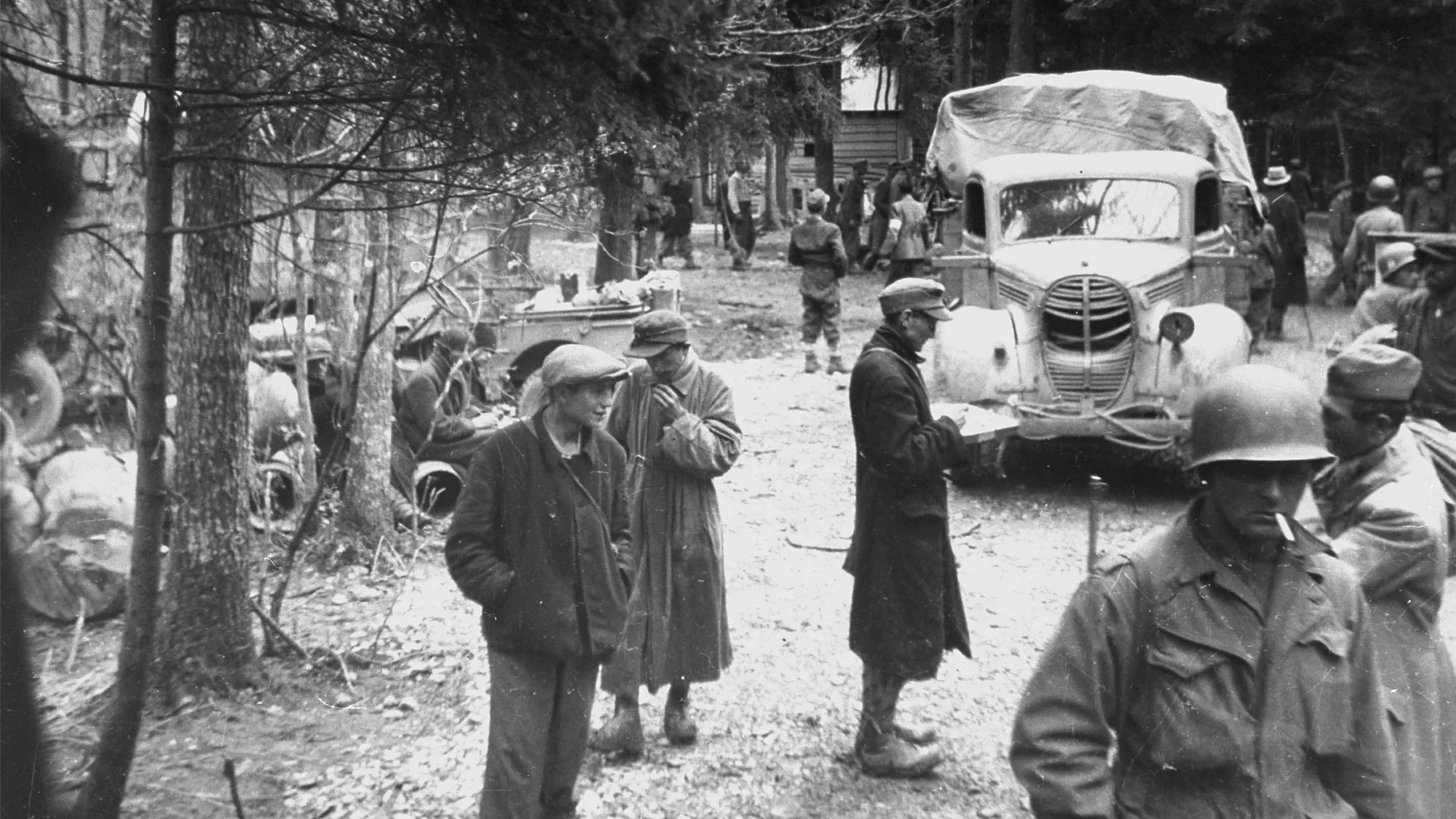
Station 4
United States Holocaust Memorial Museum Photo Archives #12769, Copyright: United States Holocaust Memorial Museum, Provenance: Thomas Sweeney
“It was lucky that the Americans arrived at the last minute. Another day or two later and I don’t think there would have been anyone left alive there.”
Shaul Spielmann 1
American troops arrived at Gunskirchen satellite camp on 4 May 1945 and liberated the camp. The SS had left the camp already in the preceding days, and the prisoners were completely abandoned.
When the first American scouts entered the site, they discovered an unfathomable scene: a fenced area of woodland full of corpses and people close to death. They reported: “We don’t know where we are, but it’s some kind of prison, there are lots of dead bodies and sick people lying around […]. We need urgent medical assistance.”
Shortly afterwards, the units of the 71st U.S. Infantry Division reached the camp. They found people lying and crawling in the mud who could barely stand. The smell of death was everywhere and lodged deep in the soldiers’ memories.
There was excitement among the prisoners even before the American Army arrived, once they witnessed the hasty departure of the SS from the camp. From then on, the prisoners’ days continued to be marked by hunger, illness and complete exhaustion, while a few individuals left the camp before the Americans arrived.
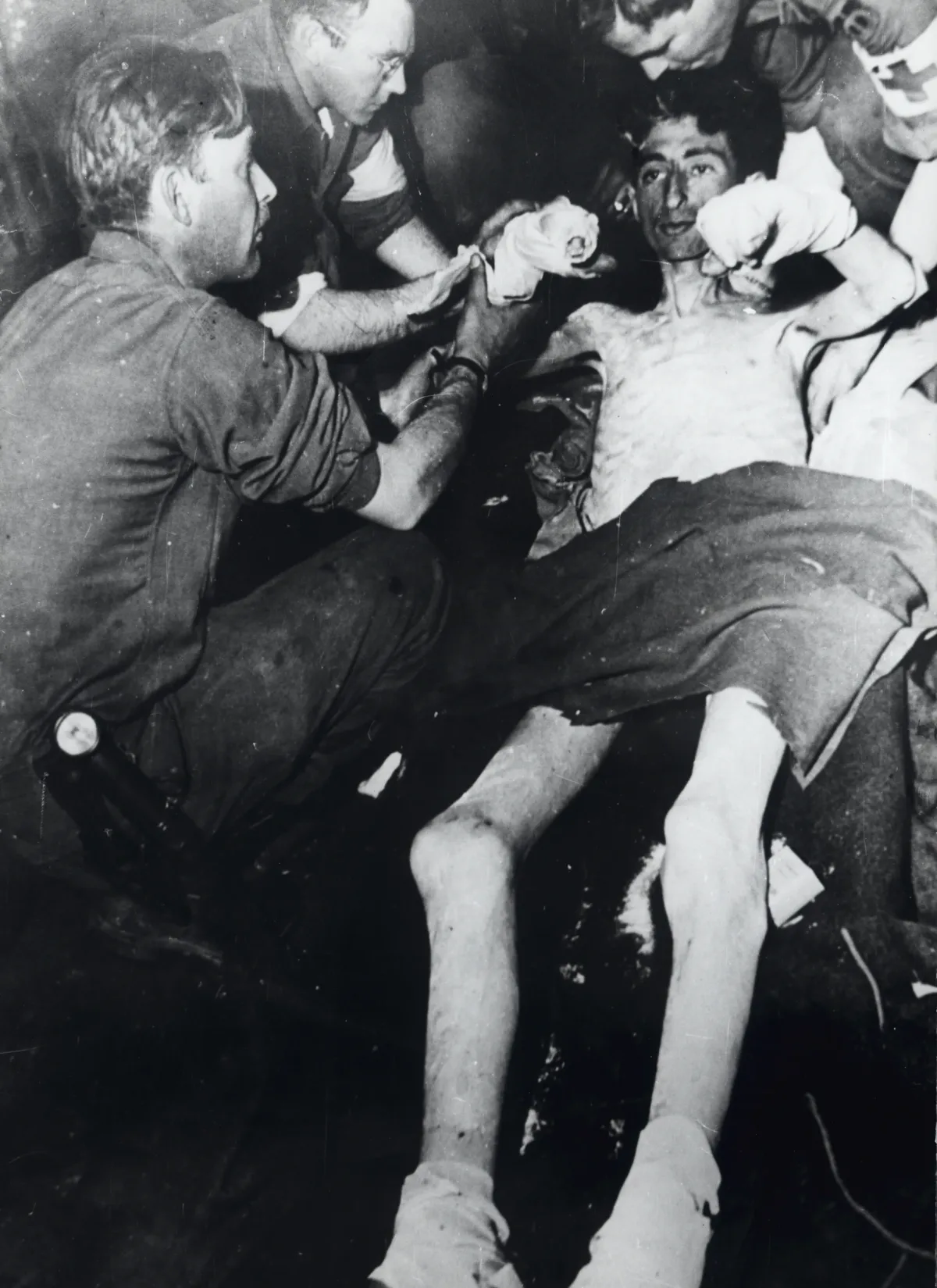
Many survivors came flooding up to the American soldiers asking them for help. The American troops immediately set about taking care of the prisoners, organising water and food and trying to establish initial order. At the same time, however, the years of malnutrition were having a visible impact. Countless prisoners died in the days following liberation from eating the canned food or chocolate the American soldiers gave them as their bodies couldn’t handle larger amounts of food.
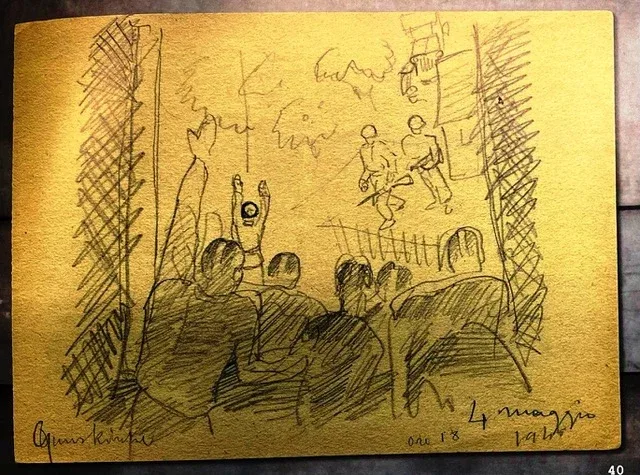
The situation remained chaotic in the days following the liberation. Scores of people who had been moved to emergency accommodation or hospitals nearby died there from the impact of years of hunger and sickness. The former German soldiers and SS troops captured by the Americans were forced to dig graves for the huge numbers of dead. Early records documented between 3000 and 6500 dead in seven mass graves.
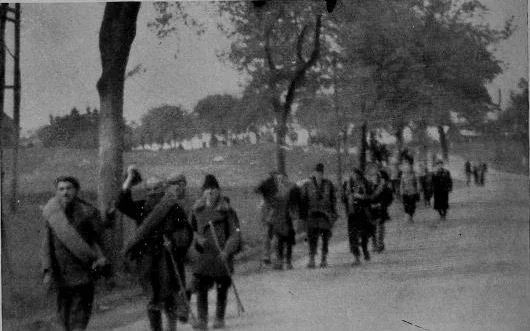
Only gradually, the former concentration camp prisoners who had regained their strength were able to begin their journeys home.
References
Gunskirchen satellite camp was liberated by American troops on 4 May 1945. In the final days before the liberation, life in the camp was very different.
Survivor Stephan Virányi recounted that the SS camp commandant of Gunskirchen sent a truck with a white flag to meet the approaching American troops and hand over a letter to the American leaders. This letter apparently informed them that the camp commandant had received orders to put all the prisoners in the barracks, lock the windows and doors, and destroy the camp. If the SS guards were allowed to leave the camp unimpeded before the Americans’ arrival, the camp commandant would not carry out the orders to kill all the prisoners.
The Americans allegedly agreed to this offer.1
The SS guards then left Gunskirchen satellite camp on 3 May 1945. Before they left, they tried to order the prisoners to bury as many corpses as possible.2 In return, according to reports from the US American liberators based on conversations with survivors, the prisoners received “what they considered a very liberal food ration: One lump of sugar per person and one loaf of bread for every seven persons.”3
There was excitement among the prisoners even before the American Army arrived, once they witnessed the hasty departure of the SS from the camp. Emil Herman, who was 15 years old at the time reported breaking out of the camp and setting off by himself with two friends on 4 May, before the Americans arrived at the camp.4
George Heller – After the liberation of the Gunskirchen satellite camp
Nicholas Halmay – The liberation
Yehuda Gurvich – The SS before liberation
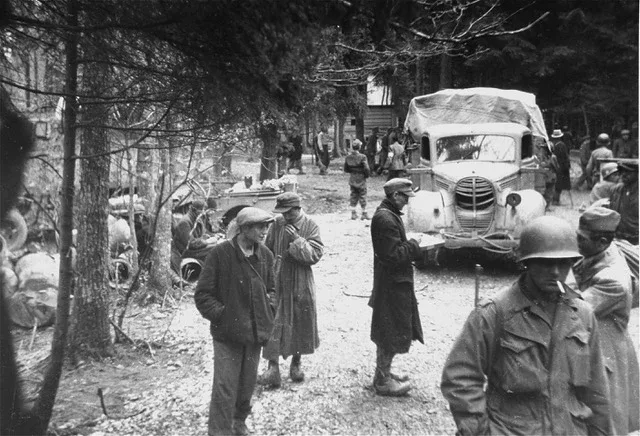
The American troops from the 71st Infantry Division of the Third U.S. Army reached the town of Gunskirchen on 4 May 1945 and were able to take it without a fight. During their search for a reported “SS camp in Gunskirchen”, the scouts Bill Jucksch and Peter Carnabucci were the first to reach the satellite camp in the ‘Hochholz’ piece of forest near Gunskirchen on the same day. They reported to their commander: “We don’t know where we are, but it’s some kind of prison, there are lots of dead bodies and sick people lying around, they are all fenced in. We need urgent medical assistance.”5
The troops of the 71st Infantry Division of the Third U.S. Army reached the camp in the evening. Behind the camp gates they saw people shuffling, crawling or lying in ankle-deep mud. The forest floor was littered with bodies. The horrendous smell of human excreta hung in the air. The experiences and impressions of the American liberators were recorded in the pamphlet ‘The Seventy-First Came … To Gunskirchen Lager’, which aimed to document the terrible conditions and was widely circulated in the U.S.
The American soldiers’ initial impressions were shock and horror at what they found: Captain J.D. Pletcher described hundreds of starving inmates who came towards the American soldiers as they drove into the camp on the narrow forest road and begged them for food and cigarettes. Major Coffman wrote about the journey into the woods: “Traveling into the camp along a narrow wagon road was an experience in dodging the multitude of dazed men, women, and children fleeing from the horrors of this living hell. […] The road was clogged with hundreds, but many did not get far. Dozens died before they had gone but a few hundred yards from their “hell-hole” prison. […] A lieutenant stooped to feed one creature a bit of chocolate. The man died in his arms.”6 Countless prisoners died shortly after the liberation from eating the canned food or chocolate the American soldiers gave them as their bodies couldn’t handle larger amounts of food after their years of hardship and malnutrition.
Floyd Dade – Soldier in the 71st Infantry Division recounts the liberation of the Gunskirchen satellite camp
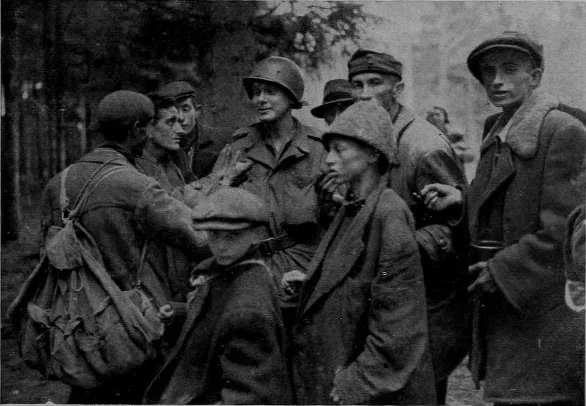
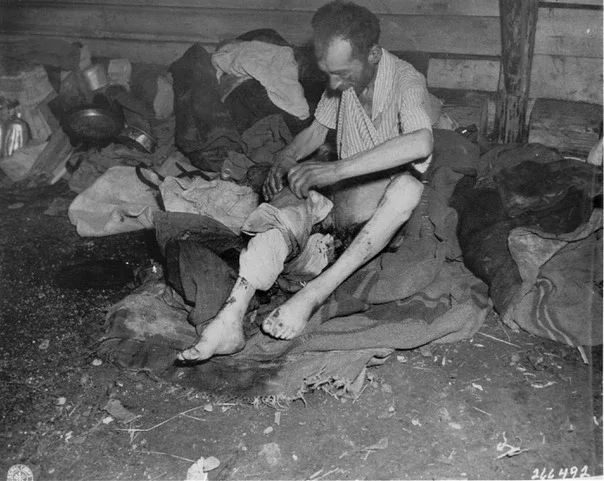
The smell of the camp became particularly ingrained in the American soldiers’ memories. It was the first thing they noticed about the camp. Captain J.D. Pletcher recounted: “Then came the next indication of the camp’s nearness – the smell. There was something about the smell of Gunskirchen I shall never forget. It was strong, yes, and permeating, too. Some six hours after we left the place, six hours spent riding in a jeep, where the wind was whistling around us, we could still detect the Gunskirchen smell. It had permeated our clothing, and stayed with us. […] The smell of Gunskirchen nauseated many of the Americans who went there. It was a smell I’ll never forget, completely different from anything I’ve ever encountered. It could almost be seen and hung over the camp like a fog of death.”7
Immediately after the Americans arrived, large groups of prisoners crowded around the soldiers and made it impossible for them to drive any further into the camp. All the inmates who were still strong enough came out of their barracks to see the Americans for themselves. They kissed the American soldiers and embraced them. A Hungarian prisoner climbed on the Americans’ jeep with their permission and asked his fellow prisoners “to help the Yanks by staying off the roads. He told them that the Americans were bringing food and water and medical help. After every sentence he was interrupted by loud cheers from the crowd. It was almost like a political speech.”8 After the end of that brief speech, the prisoners moved back to allow the Americans to drive the rest of the way into the camp.
One scene that the American soldiers described illustrates just how hungry the prisoners were. Outside the gate of the camp was the carcass of a horse that had been killed by shellfire. The Americans witnessed an inmate eating the raw flesh off the carcass that was several days old. The next day, half of the carcass had been sliced away.9 Major Cameron Coffman recalled that cries for water were heard everywhere they turned, alongside those for food.10
A number of the prisoners also showed a considerable interest in the current developments in the war and the successes of the U.S. and Soviet armies.11
Horace Berry – Soldier in the 71st Infantry Division recounts the liberation of the Gunskirchen satellite camp
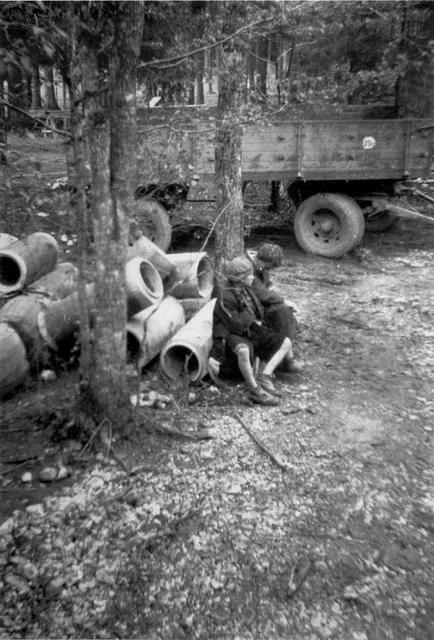
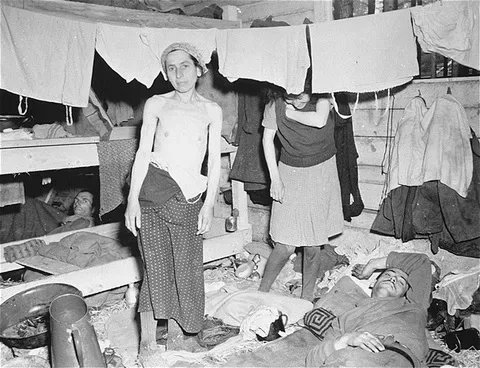
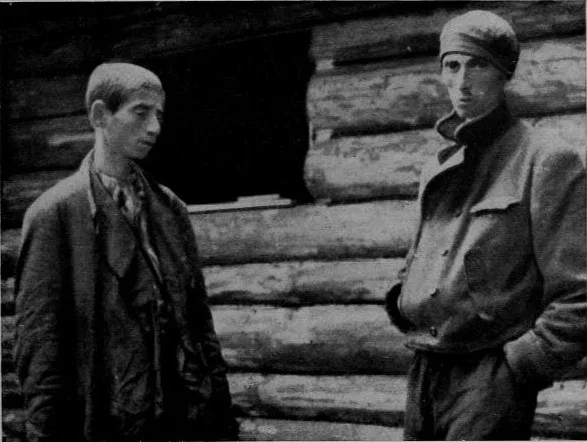
The American troops immediately set about looking after the prisoners and organising provisions for them. But extended supply lines made the food situation a major problem – until a couple of soldiers discovered a German supply train nearby. Captain William R. Swope, assisted by an Austrian civilian, drove the train onto a siding near the camp. Physical force was necessary for order when the first food lines were organised.12
Water was brought into the camp in a German tank wagon. A German food warehouse was also discovered close to Gunskirchen, from which dried noodles, potatoes, soups and meats were transported to the camp by civilians under the supervision of American soldiers. But countless prisoners died as a result of this sudden and unaccustomed intake of food.13
Contemporary witness Meta Synk-Regensburg, who was living in Gunskirchen at the time, described the scenes at the food warehouse: “The concentration camp prisoners opened up the warehouse, cut open sacks and gleefully dived into the food. […] Five dying inmates lay in the food supplies that were stacked several metres high licking sugar with their tongues.”14 According to the Wels district police force chronicles, the food distribution was organised by 20 American soldiers to ensure it was shared out fairly. However, the Gunskirchen municipal chronicles report that they were not successful in this.
Meta Synok-Regensburger – A civilian after the liberation
The prisoners of the forest camp and the camp in the primary school were officially freed on 5 May 1945.15 According to the Americans’ estimates, there were 15,000 prisoners still alive when they arrived16, who then gradually left the camp. The liberated prisoners were housed in emergency accommodation and with private individuals across the whole district of Wels on the Americans’ orders.
Survivor Daniel Chanoch found the liberation of Gunskirchen satellite camp extremely overwhelming: “The sudden change was impossible to grasp or understand. Everything suddenly blew apart. The Germans disappeared, leaving everyone lost and bewildered: What’s going on? What’s going to happen? What should we do and what can we do? […] As soon as Daniel and his friend Yankele realised that Gunskirchen had been taken by the U.S. Army and the Germans were hurriedly fleeing, the two of them immediately left the camp. Their main priority was to get away, to leave the place and the excitement behind them, to free themselves.” 17
Daniel Chanoch – After the liberation of the Gunskirchen satellite camp
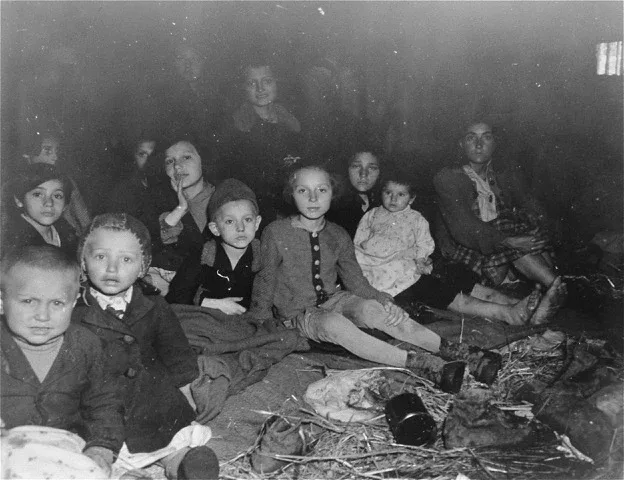
“I started to think: What happens next? The French have gone to France, the Italians to Italy, the Dutch to the Netherlands. We Jews had nowhere to return to. […] I decided to head for Palestine.”
Daniel Chanoch 18
Shaul Spielmann reported that the local civilian population hid as “they were afraid of the inmates and wanted nothing to do with them”.19 The numerous sick prisoners were taken to temporary hospitals in Wels, Lambach, Bad Schallerbach and Hörsching. A typhoid and spotted fever epidemic broke out in the extremely overcrowded hospitals, which cost many former prisoners their lives even after the liberation and also spread to local residents and the hospital workers.20
George Heller – The Liberation and the way to the Alpenjägerkaserne
Helen Balsam – The liberation and stay in the hospital
Hugo Gryn – The liberation and the death of his father
Irving Balsam – Stay in the hospital and meeting his wife, Helen
Michael Kraus – The first encounter with the liberators and the journey to Hörsching
Nicholas Halmay – The Days Following the Liberation
Shaul Spielmann – The Way to Hörsching
Yehuda Gurvich – The liberation – The days and weeks that followed
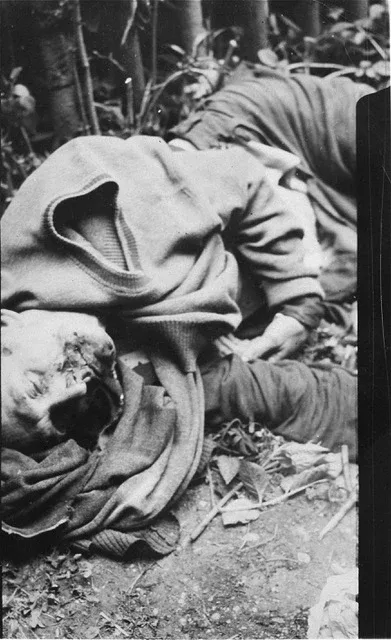
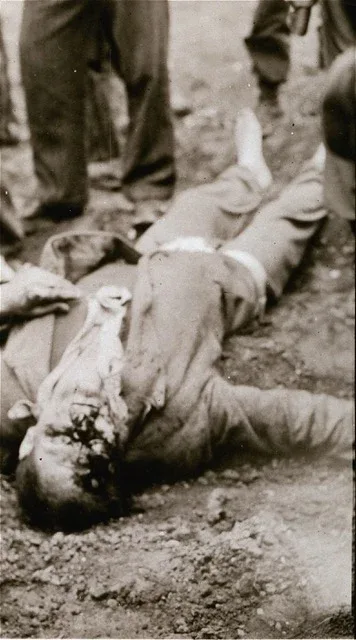
In the days following the liberation, the Wels district police force chronicles report that there were also isolated acts of revenge against former Kapos (prisoner functionaries) and suspected perpetrators. While this claim cannot be considered substantiated, it is supported by two photographs showing murdered guards, although no SS uniforms can be seen in the images.21 According to the Gunskirchen municipal chronicles, the police chief of Wels, Polizeikommissar (Police Commissioner) Markut, a high-ranking SS officer was also recognised by Polish survivors and severely injured by the seven stab wounds he sustained. An individual who lived in Gunskirchen at the time confirmed several instances of lynch mob justice against Kapos or other prisoner functionaries: “There was one Kapo Fischer working in the office, who was said to have killed concentration camp prisoners. He was beaten so severely by the prisoners after the liberation that he died on the spot.”22, 2002, P. 120. quelle: baumgartner-kropf-2002)
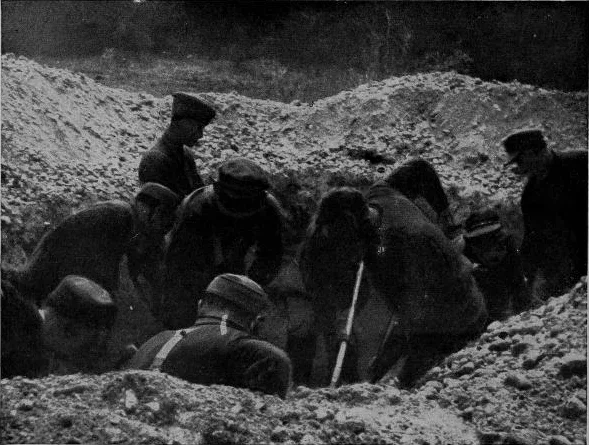
The former German soldiers and SS troops captured by the Americans were forced to dig graves for the many dead. US soldier David L. Ichelson reported that his platoon was stationed in Gunskirchen for two weeks to supervise the German soldiers digging the graves.23 Huge numbers of prisoners were buried in mass graves in the subsequent weeks.24
A resident of Gunskirchen reported: “The former Nazis were brought in and had to dig graves next to the warehouse, next to the Rota factory, and the dead were buried there. Some were also buried in the gravel pit further down. They were then dug up again later and buried in a mass grave in the camp. But this was of course just a temporary solution, because they didn’t have any coffins. And they didn’t have enough space to bury them all in the cemetery either. And so the Nazis were tasked with digging the grave as punishment.”25
Footage of the liberators
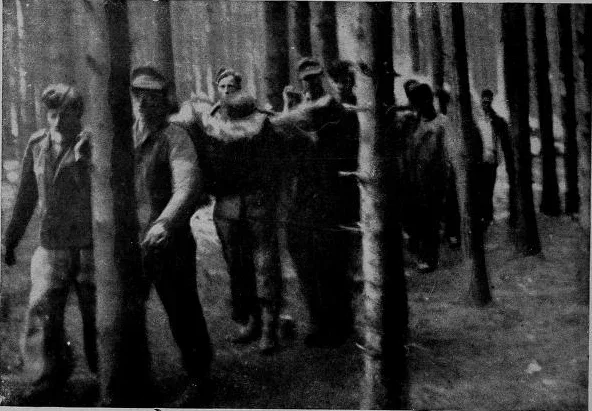
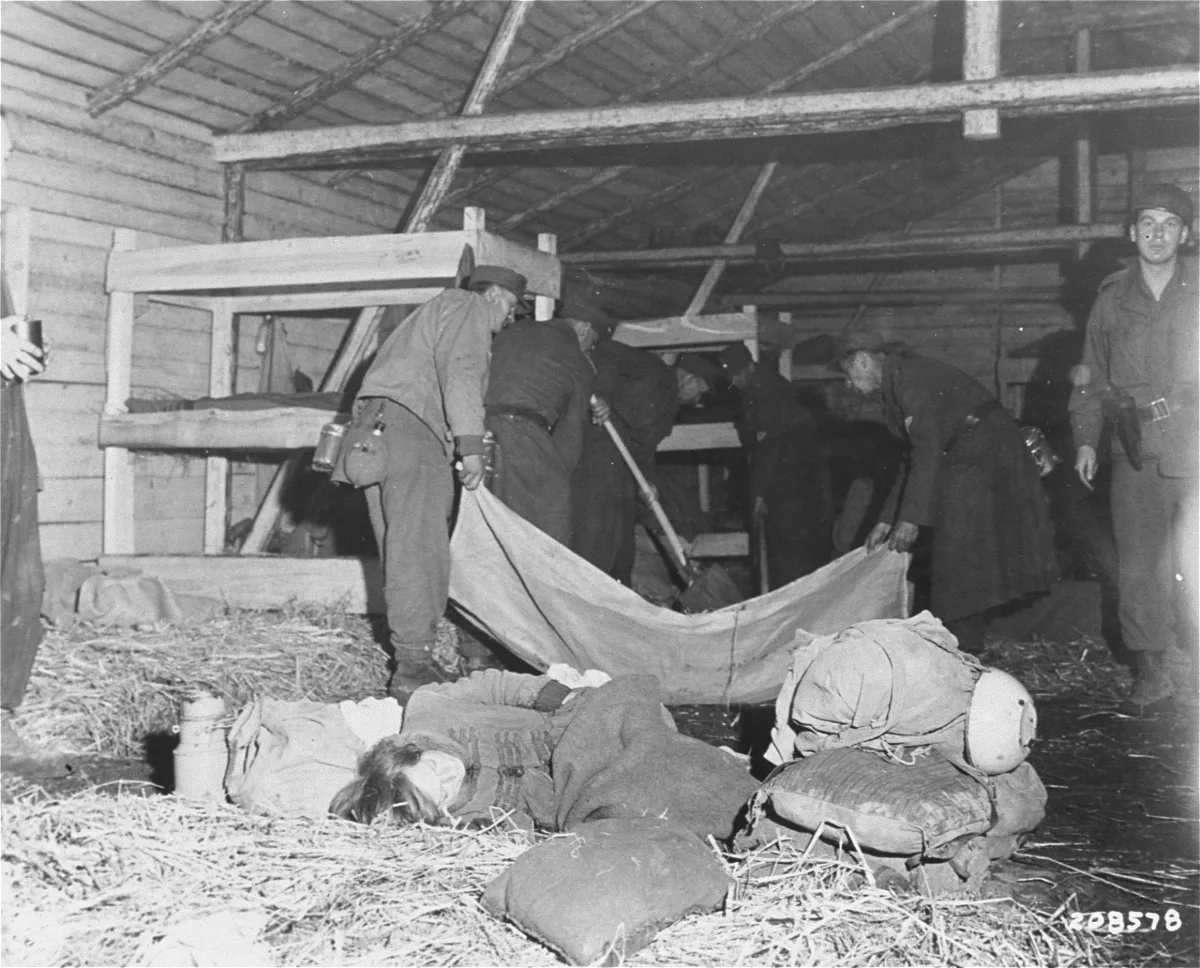
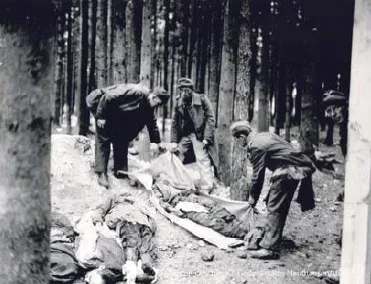
There is also evidence of a mass grave where several hundred dead from Gunskirchen satellite camp were buried on the site of the air base.26 Numerous dead who lost their lives shortly after the liberation were buried in the Wels city cemetery. Between May and August 1945, over 1000 bodies were moved to the south Linz cemetery.27 But some of these bodies may have come from other camps, so they cannot all be attributed to the Gunskirchen satellite camp. After the end of the war, further graves were found; a total of 5000 dead were documented in a report from the Lambach police station of 16 September 1946.28 29These are probably made up of around 3500 bodies of people who died at Gunskirchen satellite camp and 1000 to 1500 bodies of people who died after the liberation; but these figures cannot be considered substantiated. In earlier records, between 3000 and 6500 bodies were documented in seven mass graves.
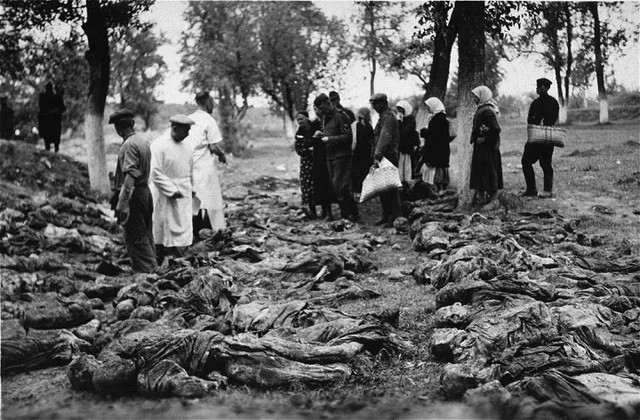
Very little is known today about the majority of the perpetrators from the Gunskirchen satellite camp. The deputy work detail commander Heinrich Häger, who was responsible for supervising the construction detachment and for the guards in the satellite camp, was sentenced to death in the Mauthausen concentration camp trial in Dachau.30 This sentence was carried out on 27 May 1947.31 Paul Anton Kaiser, who was tasked with guarding the timber felling detachment, was found in the former primary school in Gunskirchen when the Americans arrived. He was not arrested but was also later sentenced to death at the Mauthausen concentration camp trial.32 This sentence was carried out on 28 May 1947.33 No information can be found and no trials or sentences have been documented in relation to any of the other perpetrators.
References
Yehuda Gurvich – Speech at the remains of the latrines during the “Walk of Solidarity” as part of the liberation ceremony
Source: Interview Jehuda Gurvich
Shaul Spielmann – Speech at the U.S. Army memorial stone during the “Walk of Solidarity” as part of the liberation ceremony
Source: Interview Shaul Spielmann
Explore individual locations in three dimensions.
Opening this view loads external content.
Open view in a new tabcontinue to