
Station 5
Developments after 1945
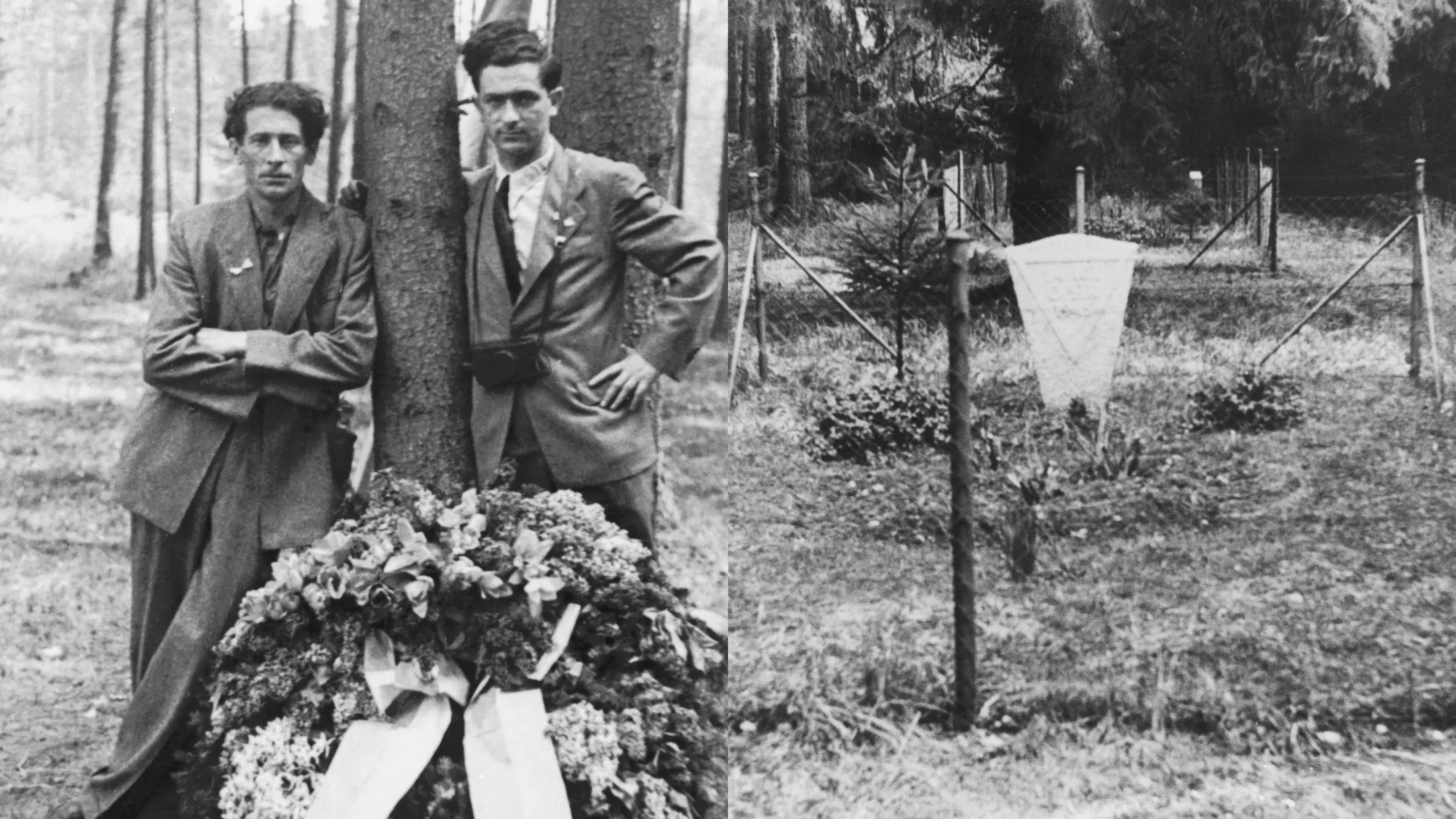
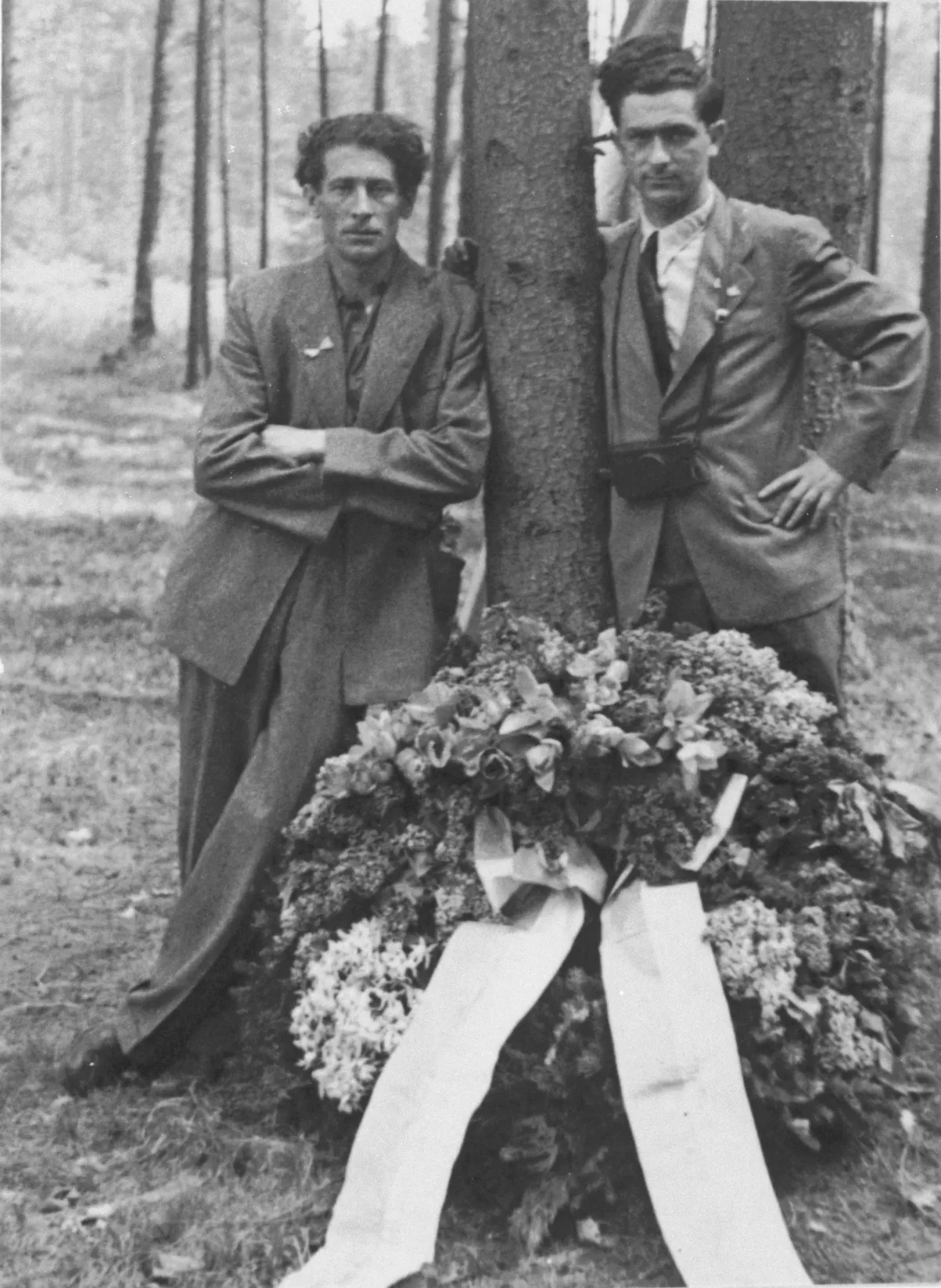
United States Holocaust Memorial Museum Photo Archives #41323, Copyright: United States Holocaust Memorial Museum, Provenance: Willie Sterner; Mauthausen Memorial MM_4_1_0265, MM_4_1_0266
Summary
“What is solidarity?
Solidarity is when you are marching in a death march on 18 January 1945 and have no strength left, then a comrade comes and with the last of his strength helps you to walk.
Solidarity is when you have nothing to eat and the last bit of bread is shared with a comrade.
Solidarity is when it is cold and you share some of your own body heat to help someone else warm up.
That is solidarity the way we learned it.”
Daniel Chanoch 1
After the liberation, Gunskirchen satellite camp did not simply disappear from history but it disappeared from the landscape. The barracks were torn down, the forest regrew and the traces of the satellite camp became less and less visible over time.
However, the atrocities committed by the Nazi regime in the Gunskirchen satellite camp and the thousands of people murdered will never be forgotten, particularly among the survivors and their descendants. From the time they were liberated, the survivors were keen to preserve the memory of the thousands murdered. They erected the first memorial stones at the mass graves as early as 1946 and organised commemoration ceremonies. But as more and more of them left Austria or returned to their home countries, there was less and less talk about Gunskirchen. The first official memorials were erected in 1948 and, thanks to the persistent efforts of survivors of the satellite camp, over time seven mass graves were also marked with memorial stones.
In 1979, 1227 bodies were finally exhumed and buried at Mauthausen Memorial. Due to the huge difference between the number of victims of the camp and the number of exhumed bodies, it can however be assumed that there are still human remains beneath the forest floor at the sites of the mass graves today. After years of calls for one, a memorial was finally erected on Bundesstraße 1 in 1981. Since then, liberation ceremonies have been held every year by the local Gunskirchen initiative in cooperation with Mauthausen Committee Austria (MKÖ) and Mittelschule Gunskirchen (Gunskirchen Middle School) on the site of the former satellite camp. The memorial stone to the 71st Infantry Division of the U.S. Army was erected at the memorial site in 1995. In 2024, the commemorative plaque on the former primary school in Gunskirchen and the ‘Satellite Camp Stele’ at the memorial on the Bundesstraße were unveiled.
It was not until 2019 that a thorough archaeological survey of the site of the former Gunskirchen satellite camp was carried out. This was able to not only reconstruct the locations of the mass graves, but also recover numerous artefacts – from pieces of cloth to shoes and crockery. In 2022, Mauthausen Committee Austria (MKÖ) was able to purchase a 4000 m² plot of land on the site of the former satellite camp in order to build the Gunskirchen memorial site.
The memorial site is a place to engage with history and for educational work – particularly for young people – and a place to remember and commemorate the victims. It focuses on the responsibility of ‘Never again’.
References
- Daniel Chanoch at the Fest der Freude (Festival of Joy) in Heldenplatz in Vienna. Mauthausen Committee Austria (MKÖ). Vienna 2016. ↑
1 Developments immediately after 1945
As early as 1946, survivors erected memorial stones at the site of Gunskirchen satellite camp and at the mass graves to commemorate the victims of the camp. Many of the former concentration camp prisoners were still living in camps for displaced persons in Upper Austria at the time. They wanted to use these symbols of remembrance to remember their murdered acquaintances, comrades and family members. Even back then, the survivors organised annual commemoration ceremonies, including with the involvement of the chair of the Association of Jewish Victims of the Nazi Regime (BJVN). As the mainly Jewish survivors returned to their home countries or found new homes in other countries, the visits to the memorials in the forest decreased.
In September 1946, the United Nations Relief and Rehabilitation Administration (UNRRA) began a search to identify the locations of the mass graves in the forest. On 16 September 1946, a particularly large shaft grave was discovered. A further shaft grave was subsequently located with the help of the statement by former guard Karl Huber, which was 40 metres long and 4 metres deep. He stated that around 3,000 bodies had been buried in this grave. At the end of 1946, Hungarian survivors erected two memorial stones that were dedicated to the 6500 dead in the forest.1
After the Austrian Black Cross (ÖSK) [War Graves Commission] took over the care of the war graves in 1947, several memorials were erected in the forest in 1948 to commemorate the victims and as a symbol of the victory over the Nazi regime. These were commissioned by the governor of Upper Austria at the time, Heinrich Gleißner, who had previously held the office of governor during the period of Austrian fascism from 1934 to 1938 and later been deported by the Nazis to the concentration camps in Dachau and Buchenwald. The memorials bore the inscription “Here lie around 3000 concentration camp prisoners. We honour the memory of these victims of Edt concentration camp.”2 However, the plots of land on which these memorials stood were still privately owned.
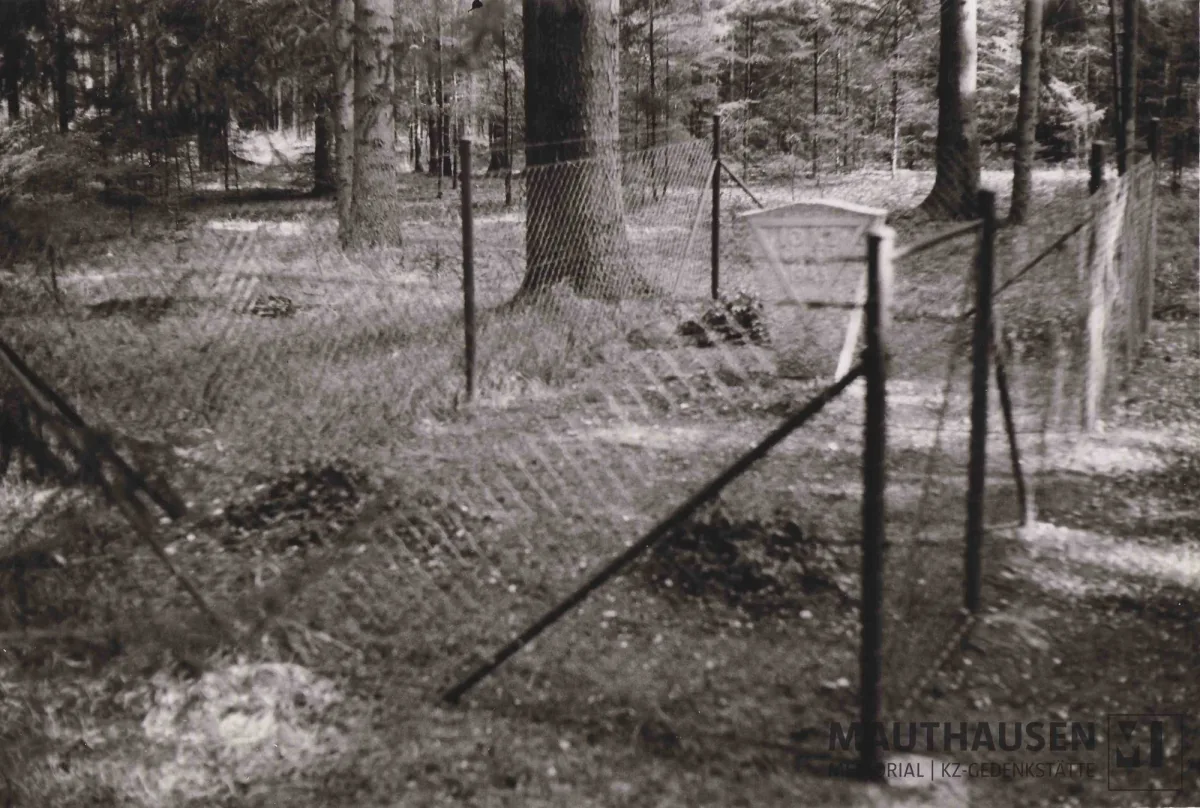
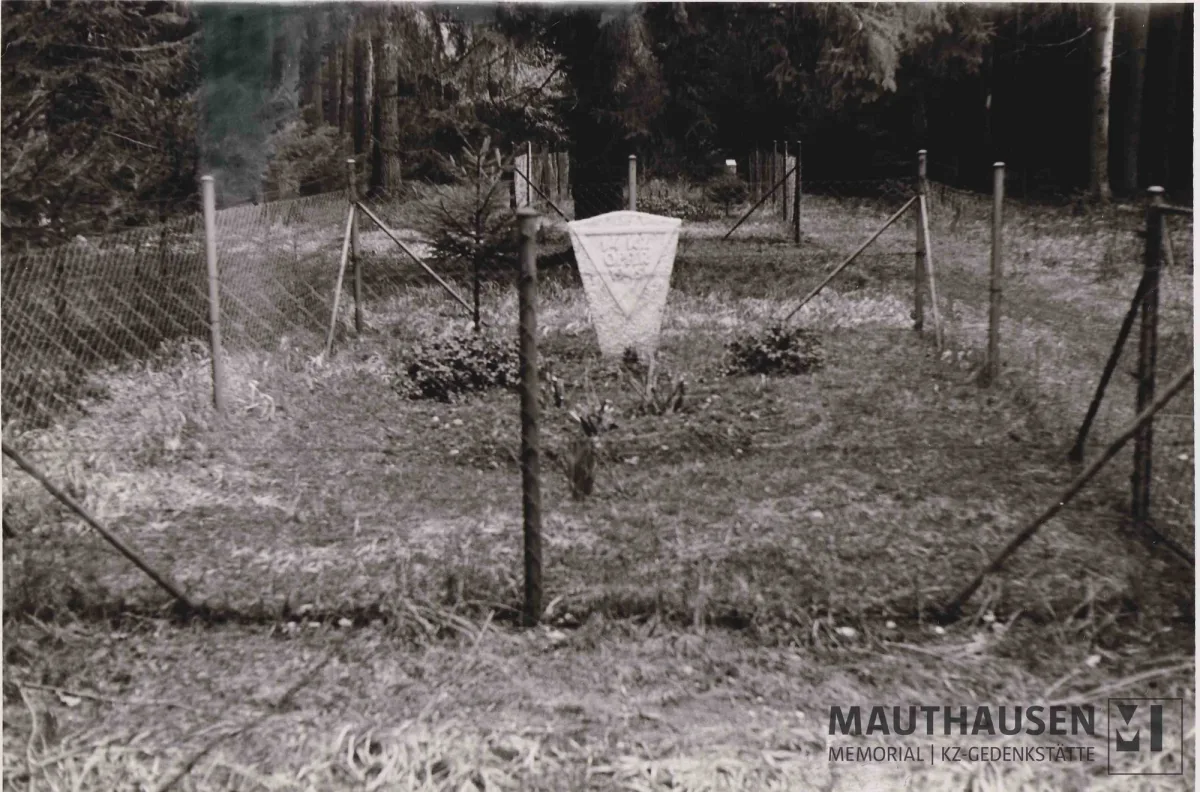
As a result of repeated entreaties made by Hungarian survivors of the Gunskirchen satellite camp to the Black Cross organisation of Upper Austria, over time seven mass graves were marked with memorial stones and surrounded with a wire mesh fence to protect them from being disturbed by wild animals. These newly marked graves were also located on private land.3
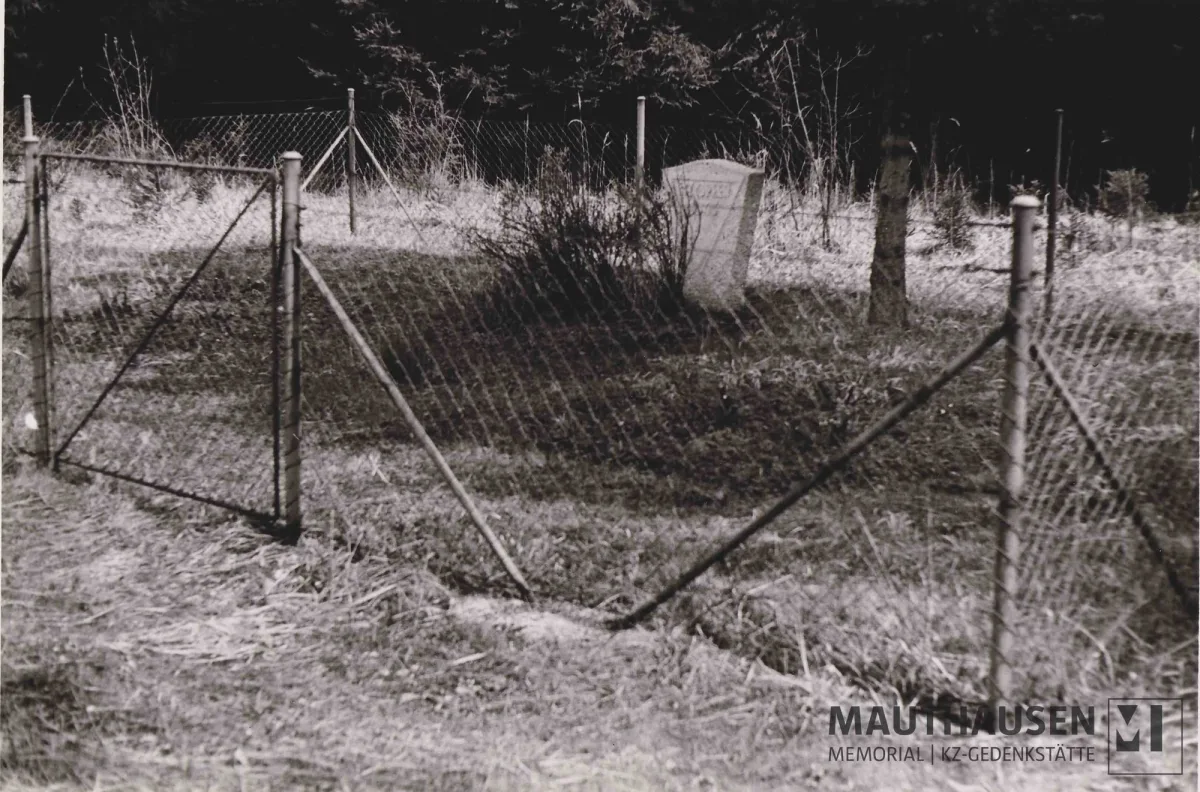
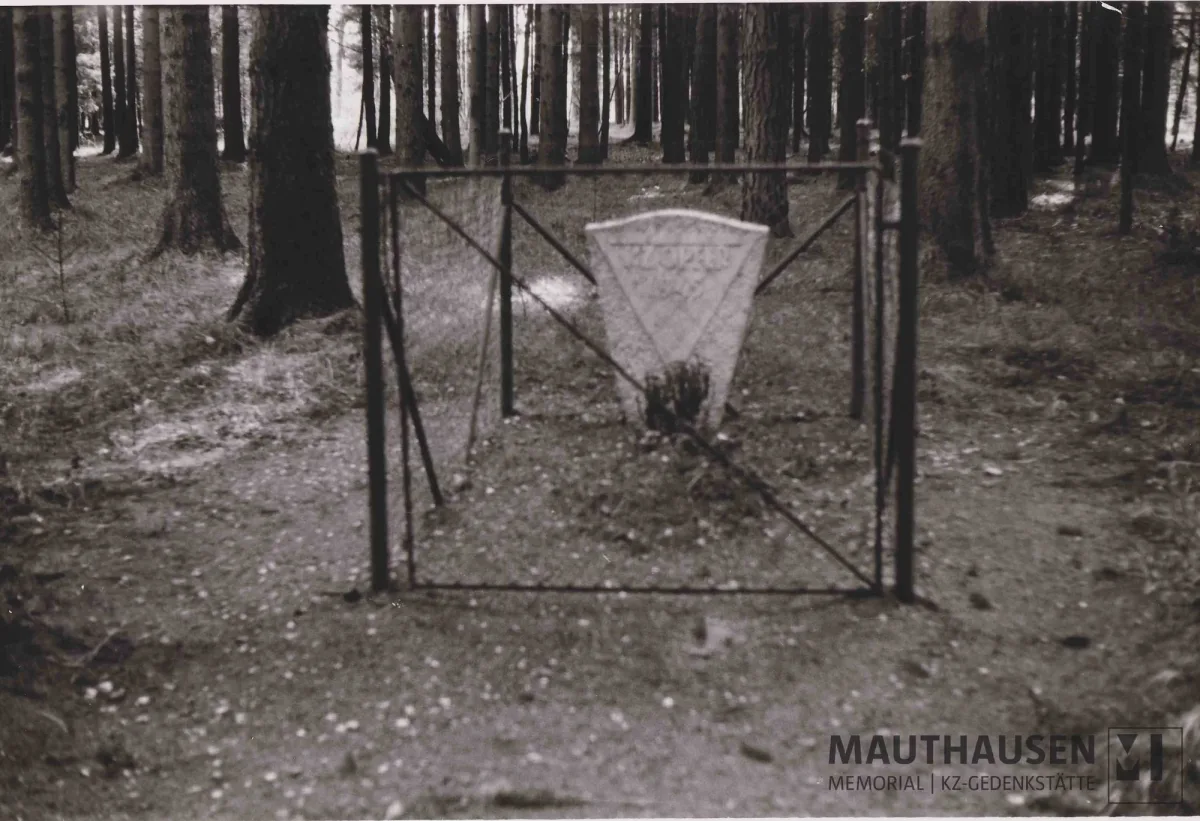
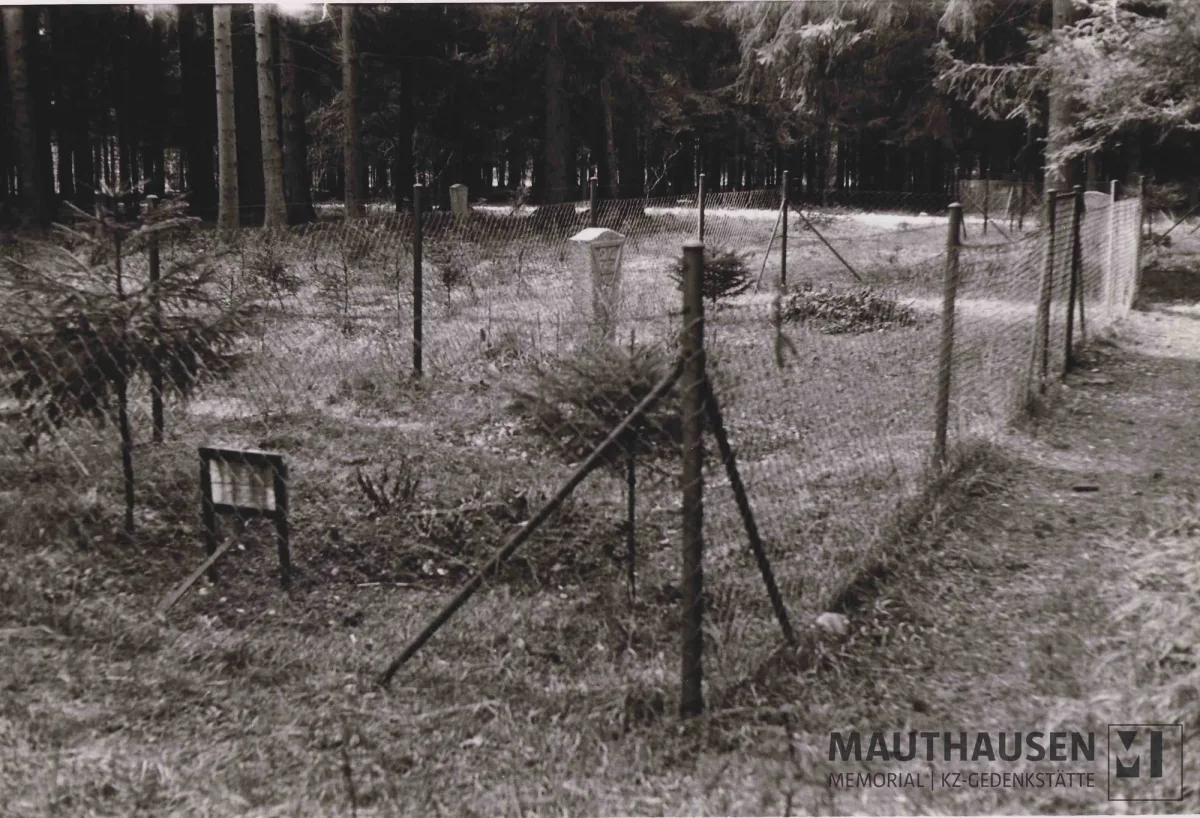
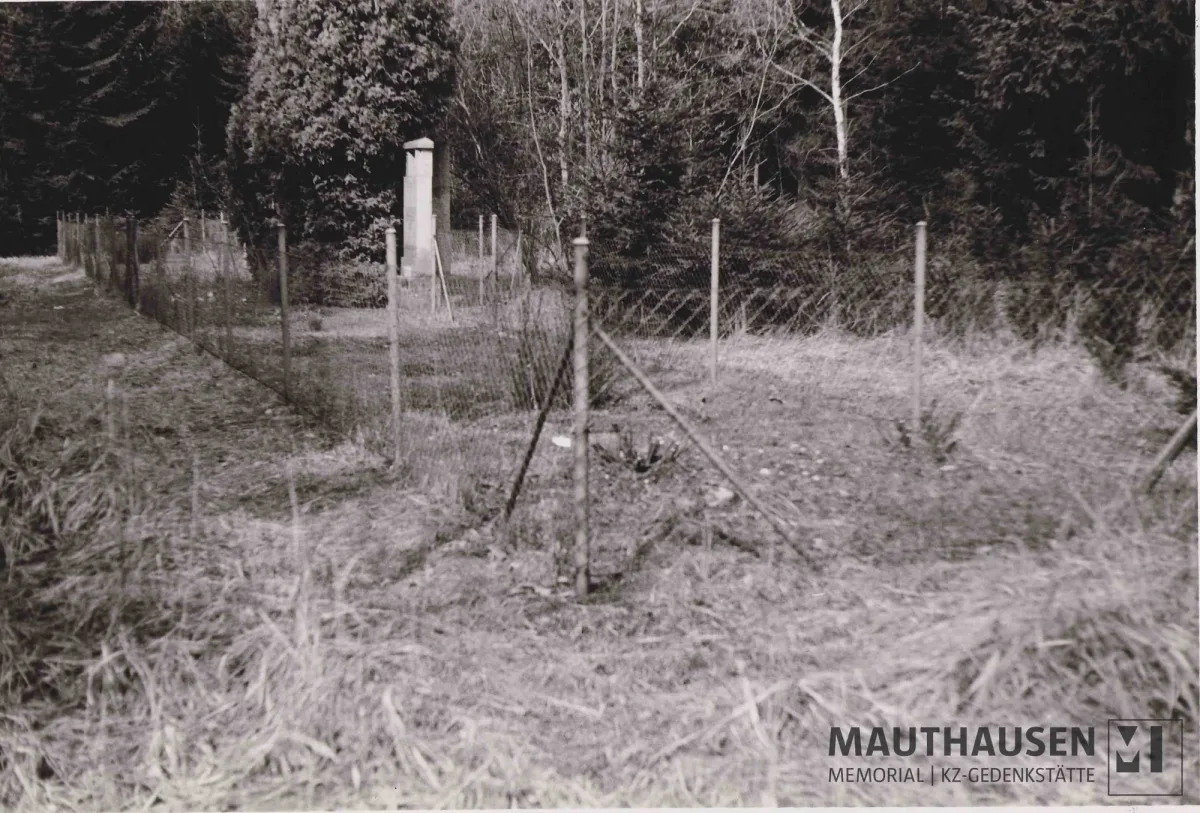
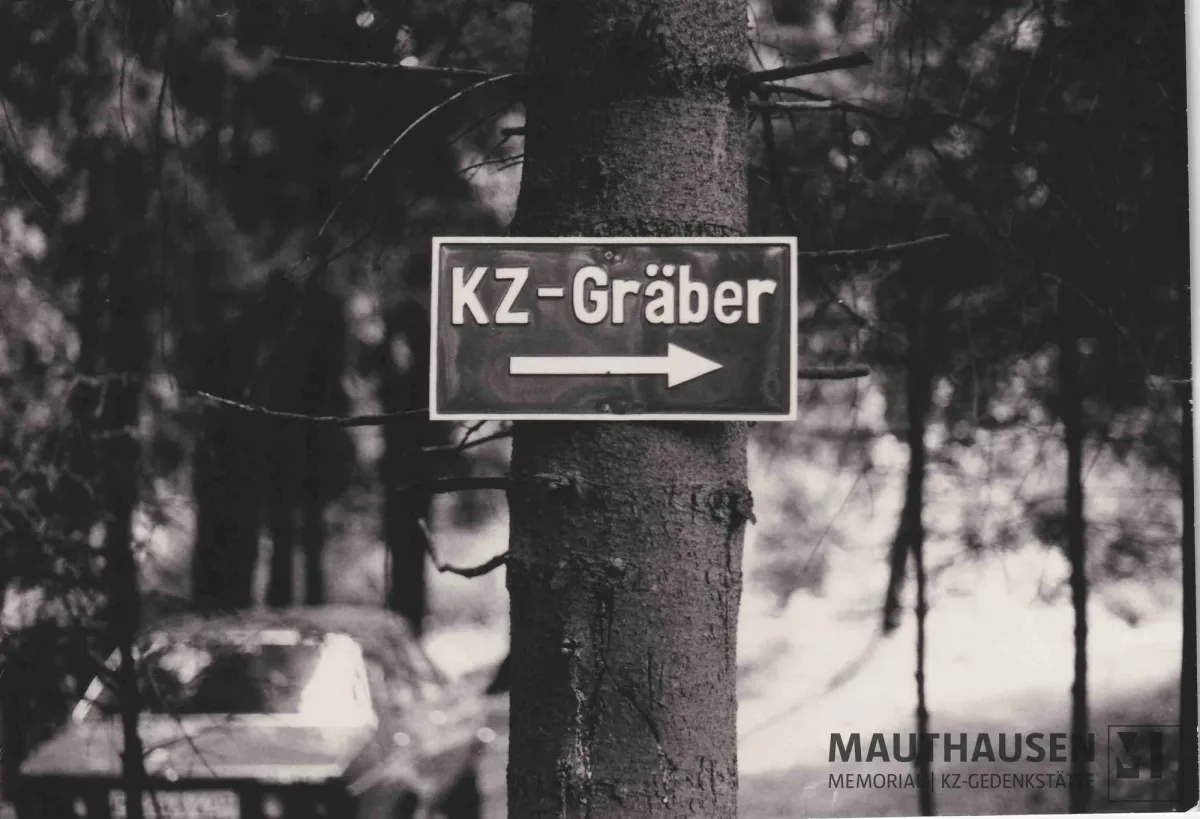
2 Developments in the 1950s and 1960s
In 1956, a fire started by candles at the graves resulted in considerable damage to the graves and the surrounding forest. In the following years, the condition of the grave sites deteriorated as a result of damage and a lack of attention. At the end of the 1960s, the condition of the graves was so poor that they were the subject of frequent complaints by various victims’ associations.
Eventually, the human remains were exhumed and reburied at the cemetery at Mauthausen Memorial on the grounds that it was no longer possible to ensure the security of the graves created in the post-war period.4 As a result of the graves being exhumed and abandoned, it is very hard to tell their precise location today.
3 Recent past
There are very few traces of the camp left today. The only things you can still see are the concrete foundations of the former SS barracks, the kitchen and one of the prisoner barracks, as well as two concrete latrines. However, there are still numerous artefacts remaining from the camp to be found on the site. From pieces of fabric from prisoners’ uniforms to spoons, crockery and barbed wire and even shoes, the forest floor repeatedly gives up relics from the camp.
An archaeological survey carried out in 2010 was able to reconstruct the location of the former mass graves. The starting point for this survey was a sketch of the camp drawn by survivor Pal Bacs, where a “mountain of bodies/mountain of death” is marked. Using historical photographs of the graves, it was possible to reconstruct their size but not their exact location. Further clues were provided by a sketch and a photo of a map of the camp with labels that are no longer legible today, which showed the paths through the forest to the mass graves and was probably displayed to provide information for visitors to the forest. It was possible to pinpoint the former locations of the graves using a map from 1946, on which the plots of land in which the graves lay were marked, and a memorial candle found in 2019.5
View the historical map – section of a map from 1960 showing the two memorials. BEV Austrian Map Online
It is important to identify the precise location of the mass graves because, firstly, it shows that the mass graves were not located inside the site of the former satellite camp and, secondly, because it can be assumed that, despite the exhumations carried out in 1979, there are still corpses of prisoners from Gunskirchen satellite camp in the ground at the grave sites.
The exhumation of the concentration camp victims was initiated by the then head of Mauthausen Memorial, Kurt Hacker, due to the graves being damaged by neo-Nazis and was carried out by the Austrian Federal Ministry of the Interior. Associations of concentration camp survivors and the Jewish Community (IKG) were involved and gave their approval in view of the damage to the graves. As most of the murdered concentration camp prisoners were Jews, the IKG insisted that Jewish religious laws be followed and the excavations be carried out in the presence of a rabbi.
However, the excavation work was then started a few weeks earlier than planned and without informing the IKG or the Association of Jewish Victims of the Nazi Regime []{.mark}(BJVN). There was also no rabbi present contrary to the requests made by the IKG. In addition, the bodies were not moved to Mauthausen in a way that was consistent with the requirements of Jewish religious law. These actions were strongly criticised by Simon Wiesenthal and the IKG.6
There was only incomplete documentation of the exhumations and the whereabouts of the 31 prisoner tags found during the process. These were found at Mauthausen Memorial in 1981 and could then be matched to Jewish concentration camp prisoners from Poland, Hungary, Romania, Slovakia and Ukraine using prisoner lists and prisoner ID cards.7 According to the exhumation report, 1227 bodies were exhumed and moved to Mauthausen. However, as it can be assumed that significantly more bodies than that number were buried in the mass graves – a list from the Upper Austrian Black Cross organisation from 1950 mentions 5175 dead – it is very likely that there are still numerous remains of prisoners of Gunskirchen satellite camp buried in the ground at the sites of the mass graves today. Whether the huge deviation between the figures can be attributed to the fact that the excavations were potentially finished earlier than planned, it’s not possible to say.8
4 A fitting monument
In 1980, Daniel Chanoch, who was liberated from the Gunskirchen satellite camp as a thirteen-year-old boy, visited the site of the former concentration camp and was appalled by the fact that there were no remaining traces or monuments to be seen. In a letter, he wrote: “I didn’t make this trip for pleasure but out of my obligation to the thousands of people who gave their lives there. […] When I see the beautiful trees, fields, meadows and streams that God created for life, and realise how in this place they were transformed into a site for exterminating people, I feel really sad that no significant monument has been erected here to communicate the history of this place.”9 Daniel Chanoch was not alone in calling for a fitting monument. Numerous victims’ organisations took up the call for a fitting monument or a memorial site.
In 1981, a memorial was finally erected on Bundesstraße 1 near Gunskirchen at the junction with the road that leads to the former site of the camp. One of the memorial stones that was previously erected in 1948 was used for the new memorial and given a new inscription. It was unveiled by the then Austrian Minister of the Interior Erwin Lanc. Angelika Schlackl reported that the survivor Daniel Chanoch declined the invitation to attend the unveiling of the memorial: “When I asked him ‘Why?’, he replied: ‘If these days someone in Israel receives an invitation to Austria just a week before the event, then you assume that your presence isn’t really wanted!’”10
The memorial stone to the 71st Infantry Division of the U.S. Army was erected at the memorial site in 1995.
5 Memorials today
Since 1981, liberation ceremonies have been organised at the site of the former satellite camp in early May each year. These are organised by local representatives of the Gunskirchen and Edt municipalities, Mittelschule Gunskirchen (Gunskirchen Middle School) and representatives of Mauthausen Committee Austria (MKÖ) and the Austrian Association of Mauthausen Survivors (ÖLM).
In 2010, Mauthausen Committee Austria (MKÖ) working together with survivor Daniel Chanoch began efforts to create a memorial site in Gunskirchen forest. In cooperation with the Memorial Initiative Gunskirchen-Edt founded in June 2024, these plans sadly only came to fruition after Daniel Chanoch’s death in 2024.
In 2010, an initial archaeological survey of the site of the former satellite camp was carried out due to an increase in the illegal sale of objects found there from that period. In 2019, another survey was carried out and the locations of the mass graves were determined. In 2020, the remains of the concrete foundations of the barracks that were still visible were given heritage protection. However, the plots of land where they are located are still privately owned at the present time.
In 2024, the memorial plaque on the former primary school in Gunskirchen and a Mauthausen Memorial ‘Satellite Camp Stele’ placed at the memorial on the B1 road and illustrating the network of the stalag camp and its satellite camps were unveiled.11
Since 2011, Mauthausen Committee Austria (MKÖ) has offered guided tours specifically for young adults at the site of the former satellite camp to raise awareness of the local history. Several cohorts of guides have been trained through courses lasting several months to form a pool of specialists in the history of the satellite camp and educational work with young people at memorial sites. The tours delivered by these guides at the sites of former satellite camps are always combined with preparatory and follow-up workshops and supplemented by an extensive digital educational offering and virtual tours via the Mauthausen Außenlager (Mauthausen Satellite Camps) app.
Following many years of efforts, in 2022 Mauthausen Committee Austria (MKÖ) succeeded in acquiring a 4000 m² plot of land where the remaining foundations of the barracks are located in order to build a memorial site.
Together with the organisation’s regional initiatives, Mauthausen Committee Austria is committed to ensuring that the history of Gunskirchen satellite camp and the fate of its victims continue to be remembered in an appropriate way. The memorial site is a place to engage with history and for educational work – particularly for young people – and a place to remember and commemorate the victims. It focuses on the responsibility of ‘Never again’.
References
- Cf. Schlackl, KZ Gunskirchen – ‘Waldlager’. [Gunskirchen concentration camp – ‘the forest camp’.], 2023, P. 10 et seq. → Schlackl 2023 (betrifft widerstand) ↑
- Cf. Schlackl, KZ Gunskirchen – ‘Waldlager’. [Gunskirchen concentration camp – ‘the forest camp’.], 2023, P. 11. → Schlackl 2023 (betrifft widerstand) ↑
- Cf. Schlackl, KZ Gunskirchen – ‘Waldlager’. [Gunskirchen concentration camp – ‘the forest camp’.], 2023, P. 11. → Schlackl 2023 (betrifft widerstand) ↑
- Cf. Theune, Report on the archaeological survey on the site of the former Gunskirchen concentration camp/satellite camp, 2011, Following: Theune 2020, P. 2. → Theune 2011 (archaeological survey) ↑
- Cf. Theune, Report on the archaeological survey on the site of the former Gunskirchen concentration camp/satellite camp, 2011, Following: Theune 2020, P. 4–14. → Theune 2011 (archaeological survey) ↑
- Cf. Schlackl, KZ Gunskirchen – ‘Waldlager’. [Gunskirchen concentration camp – ‘the forest camp’.], 2023, P. 12. → Schlackl 2023 (betrifft widerstand) ↑
- Cf. Aschauer; Kastner, Furchtbare Wege. Der Todesmarsch ungarischer Juden durch den Bezirk Kirchdorf. [Terrible paths. The death march of Hungarian Jews through the district of Kirchdorf.], 2007, P. 25. → Aschauer/Kastner 2007 ↑
- Cf. Schlackl, KZ Gunskirchen – ‘Waldlager’. [Gunskirchen concentration camp – ‘the forest camp’.], 2023, P. 13 et seq. → Schlackl 2023 (betrifft widerstand) ↑
- Cf. Krönes; Weigensamer, A Boy’s Life. Documentary film, 2023, According to Schlackl, KZ Gunskirchen – ‘Waldlager’. [Gunskirchen concentration camp – ‘the forest camp’.] In: betrifft widerstand. [regarding resistance.], 2023, P. 14. → Schlackl 2023 (betrifft widerstand) ↑
- Cf. Schlackl, KZ Gunskirchen – ‘Waldlager’. [Gunskirchen concentration camp – ‘the forest camp’.], 2023, P. 14. → Schlackl 2023 (betrifft widerstand) ↑
- Cf. Schlackl, KZ Gunskirchen – ‘Waldlager’. [Gunskirchen concentration camp – ‘the forest camp’.], 2023, P. 15 et seq. → Schlackl 2023 (betrifft widerstand) ↑
Bibliography
- Angelika Schlackl: KZ Gunskirchen – ‘Waldlager’. [Gunskirchen concentration camp – ‘the forest camp’.] In: betrifft widerstand [regarding resistance], the journal published by the Zeitgeschichte Museum und KZ-Gedenkstätte Ebensee (Museum for Contemporary History and Ebensee Memorial), no. 148 (December 2023). → Archive
- Anton Aschauer; Wolfram Kastner: Furchtbare Wege. Der Todesmarsch ungarischer Juden durch den Bezirk Kirchdorf. [Terrible paths. The death march of Hungarian Jews through the district of Kirchdorf.] Kirchdorf 2007. → Archive
- Claudia Theune: Report on the archaeological survey on the site of the former Gunskirchen concentration camp/satellite camp. Task number: 51115.11.1, not published. Vienna 2011. Following: Theune 2020. → Archive
3D views
Explore individual locations in three dimensions.
Developments after 1945
Opening this view loads external content.
Open view in a new tabcontinue to